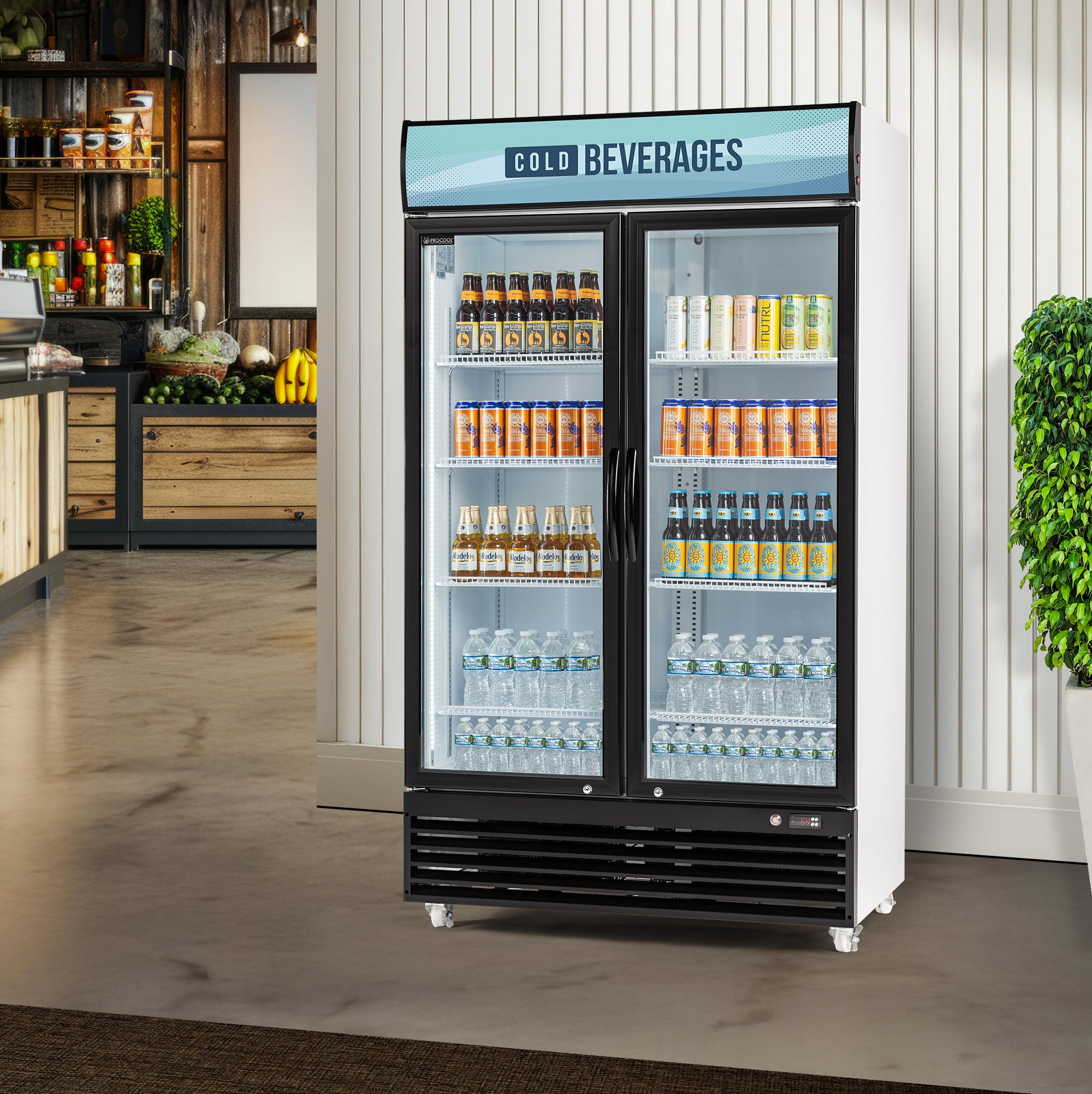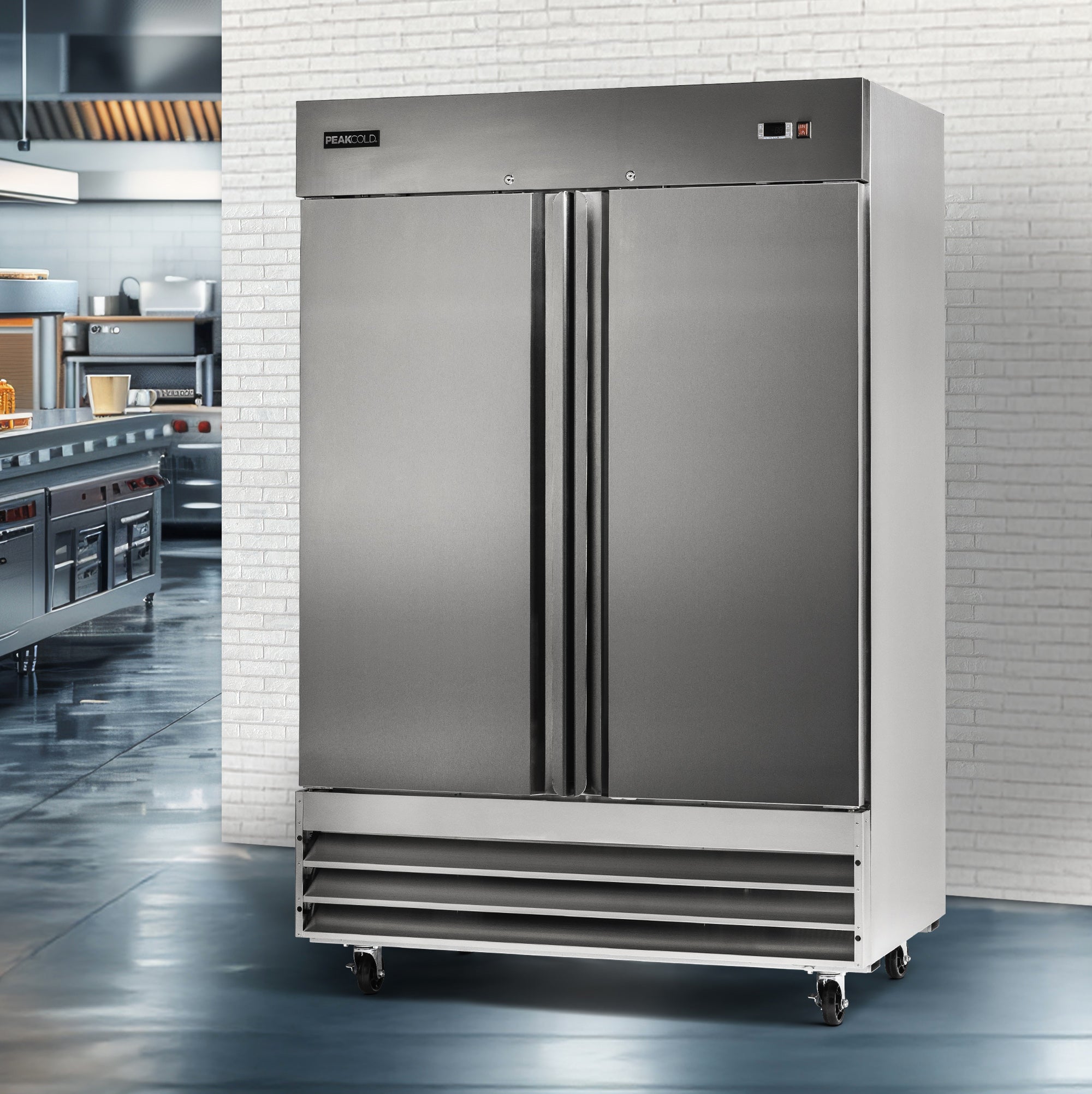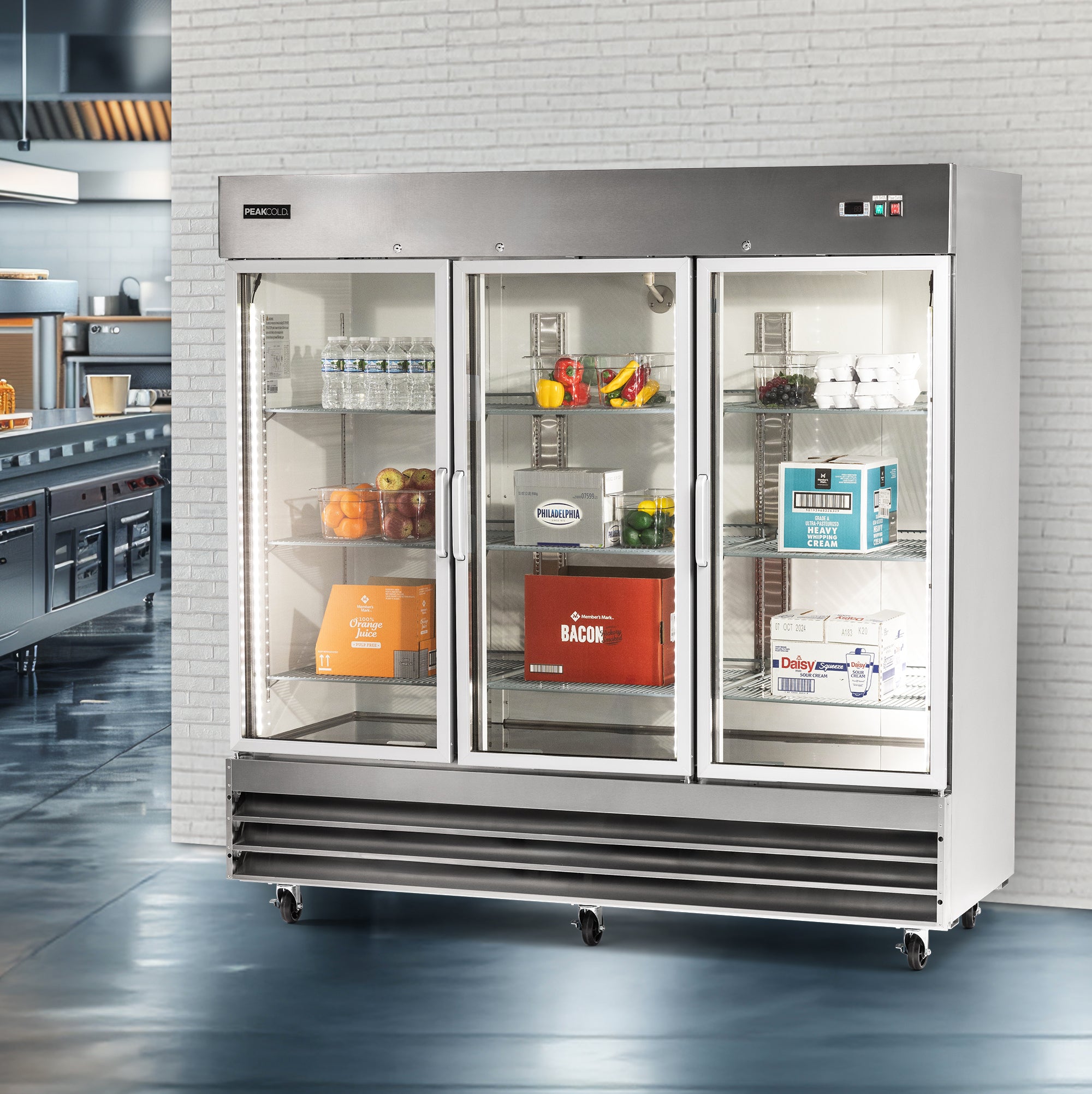

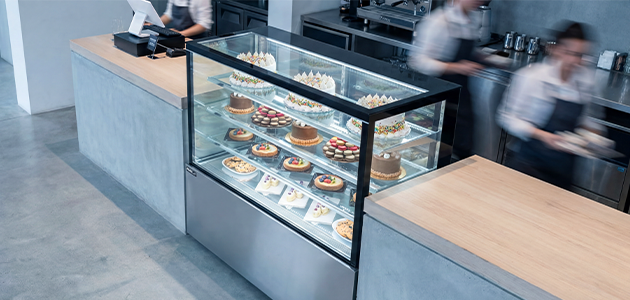
The first call on any bakery display case is whether it is refrigerated or dry. Anything with dairy, eggs, cream, custard, or cut fruit belongs in a refrigerated bakery display case holding 41 degrees F or below. Breads, cookies, scones, and unfilled pastries sell better from a dry (non-refrigerated) case, because cold air stales bread faster and softens crisp crusts. Everything after that comes down to size, glass shape, service style, and lighting.
Refrigerated vs Dry Bakery Display Cases
Refrigeration is mandatory for some products and destructive to others, so this is not a preference question. The FDA Food Code requires time/temperature control for safety (TCS) foods to be cold held at 41 degrees F or below. Cheesecake, cream and custard fillings, whipped cream, cream cheese frosting, meringue buttercreams, quiche, and cut fruit all qualify. The USDA's food safety basics explain the danger zone logic inspectors apply.
Cold air, meanwhile, is what ruins bread. Starch retrogradation, the recrystallization behind staling, runs fastest at typical refrigerator temperatures, so a baguette held at 38 degrees F stales faster than the same loaf on a counter. Chilled air also pulls moisture out of laminated dough until a croissant loses its shatter.
|
Product |
Case type |
Holding target |
|
Cheesecake, mousse cakes, cream pies |
Refrigerated |
33 to 41 degrees F |
|
Cream cheese or whipped cream frosting |
Refrigerated |
33 to 41 degrees F |
|
Eclairs, cannoli, custard tarts, fruit tarts |
Refrigerated |
33 to 41 degrees F |
|
Quiche and savory hand pies |
Refrigerated |
33 to 41 degrees F |
|
Croissants, danish, laminated pastry |
Dry |
Ambient, 65 to 75 degrees F |
|
Artisan bread, rolls, bagels |
Dry |
Ambient, 65 to 75 degrees F |
|
Cookies, brownies, muffins, scones, donuts |
Dry |
Ambient, low humidity |
If your counter also runs sandwiches or sliced meats, see our breakdown of how a deli case differs from a bakery case and compare formats in the commercial deli case lineup.
Humidity Control in Refrigerated Bakery Cases
Pastry cases are built to run wetter than deli or meat merchandisers, which hold product in deliberately dry air. That is why borrowing a meat case for pastry work goes badly, as our meat display case guide explains. Two failure modes to plan around:
-
Too dry. Buttercream crusts over, cake crumb dries, croissant layers go leathery, and chocolate loses gloss. Aggressive forced air with no humidity management causes this.
-
Too wet. Cookies, meringues, macarons, and sugar decorations go soft and tacky, and condensation inside the glass hides your product.
Ask any supplier what relative humidity the case holds, whether that figure is published on the spec sheet, and whether it is adjustable. Dry cases have no active humidity control at all, which is exactly what cookies and breads want.
Bakery Display Case Sizes and Formats
Countertop vs Floor-Standing
A countertop bakery display case typically runs 16 to 48 inches wide and 15 to 20 inches deep, sitting on existing millwork. That suits a coffee shop with eight or ten pastry SKUs, provided the counter carries the loaded weight. Floor-standing cases hold far more product and are usually rated by how many 18 by 26-inch sheet pans they accept. They are the default for a dedicated bakery.
Sizing by Linear Feet
Frontage matters more than cubic feet. Common widths land near 36, 48, 60, and 72 inches, and larger cases are often ganged into a run.
-
Cafe or coffee shop, 6 to 12 SKUs: 36 to 48 inches.
-
Neighborhood bakery, 15 to 25 SKUs: 60 to 72 inches, or two cases in a run.
-
High volume retail bakery: multiple 72-inch cases, split by refrigerated and dry.
Leave roughly 30 to 36 inches of clear aisle behind a rear-service case, and measure doorways before delivery day.
Curved Glass vs Straight Glass Fronts
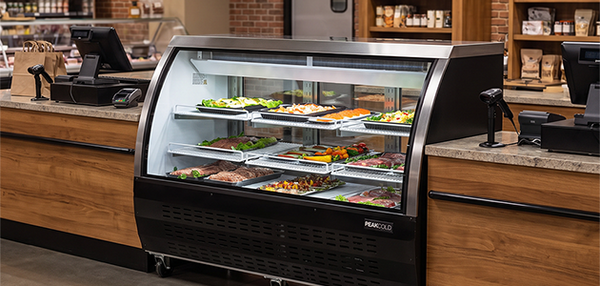
A glass bakery display case comes in two front profiles. Curved glass looks traditional and gives strong top-down visibility, which flatters tall cakes, but it costs more and replacement panels are pricier. Straight glass is easier to clean, adds usable shelf depth at the front edge, and usually prices lower.
Lighting, Service Style, and Code
LED Color Temperature
Warm white LEDs around 2700K to 3000K push golden crust tones and make breads, chocolate, and caramel look richer. Neutral white from 3500K to 4000K keeps fruit, glazes, and pastel icings looking true rather than yellowed. Specify a color rendering index of 90 or above, and choose LED over fluorescent to keep heat out of the case.
Rear-Service vs Self-Service
Rear-service (full-service) cases open toward staff, so product stays protected and waste drops. Decorated cakes almost always belong here. Self-service cases open toward the customer and move wrapped items faster. If that is your direction, look at open-air merchandisers and the sizing logic in our convenience store cooler guide.
Sneeze Guards and Health Code
Unpackaged food on display must be shielded from contamination. Food shields intercept the line between an average customer's mouth and the product, and they have to be smooth, non-toxic, and easy to clean. Look for equipment certified to the relevant NSF International food equipment standards, then confirm your layout with the local health inspector.
Frequently Asked Questions
Do cakes need to be refrigerated in a display case?
It depends on the frosting and filling. Cakes with cream cheese frosting, whipped cream, custard, mousse, or fresh fruit are TCS foods and require refrigeration at 41 degrees F or below. A plain butter cake with high sugar American buttercream may be treated as non-TCS in some jurisdictions. Confirm with your health authority before you plan a dry display.
What temperature should a bakery display case hold?
Refrigerated bakery cases are generally set between 33 and 41 degrees F, with many operators landing around 36 to 38 degrees F for product quality and a margin under the 41-degree limit. Dry cases hold ambient room temperature and should sit out of direct sun and away from oven exhaust.
What are standard bakery display case sizes?
Countertop units commonly run 16 to 48 inches wide. Floor-standing cases cluster around 36, 48, 60, and 72 inch widths, with some models reaching the mid-70s. Depth on floor models typically falls between 30 and 40 inches. Capacity is often quoted in 18 by 26 inch sheet pans, not cubic feet.
Can I keep bread in a refrigerated case?
Avoid it. Refrigerator temperatures accelerate starch retrogradation, so bread goes stale faster in a chilled case than on the counter. Cold, dry air also softens crisp crusts. Keep loaves, rolls, and unfilled laminated pastry in a dry bakery display case, and rotate to a same-day sell-through model.
Matching the Case to What You Bake
Start with your product mix, not the equipment catalog. Count the SKUs that need 41 degrees F and the ones that need ambient air, then size each case to that list plus a little frontage for seasonal items. Browse the current bakery and cake display cases, including PeakCold's curved and straight glass configurations, to compare widths, glass profiles, and service arrangements.