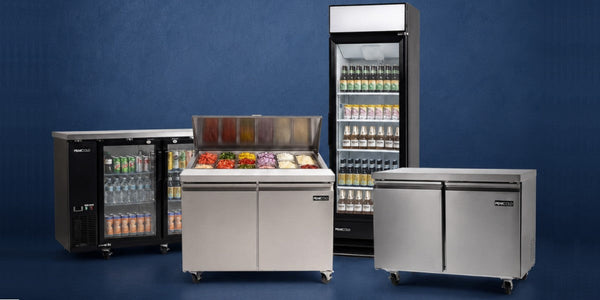

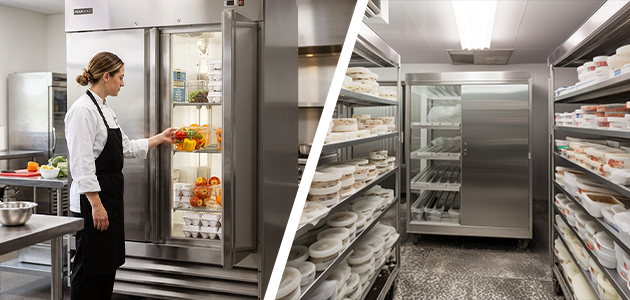
trevFor most single-location restaurants, cafes, bars, and delis, a reach-in refrigerator is the right answer. It is a self-contained appliance that arrives on a pallet, rolls into place, and plugs into a standard circuit. A walk-in cooler is a construction project: panels, a refrigeration system, permits, and usually a contractor. Walk-ins earn their cost once you receive product by the pallet or outgrow what three reach-in doors hold.
What a Reach-In Refrigerator Is
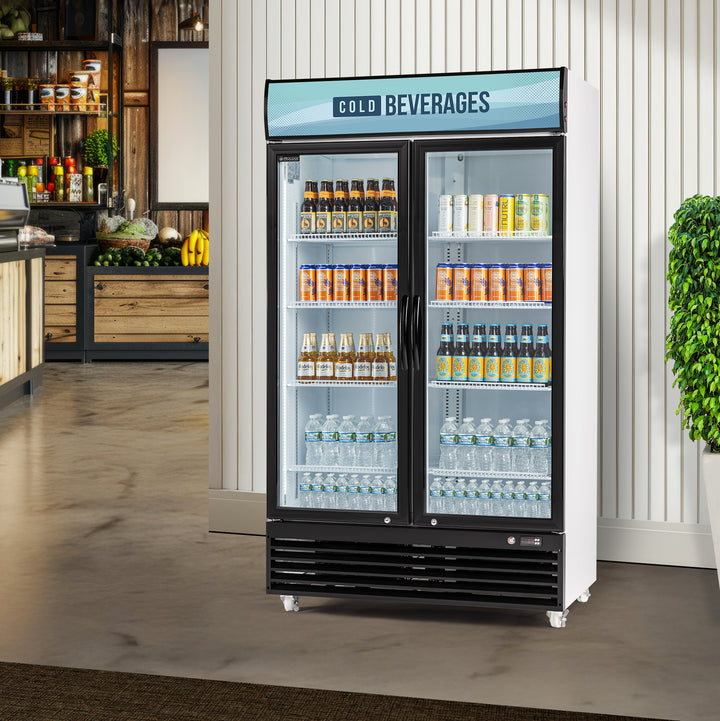
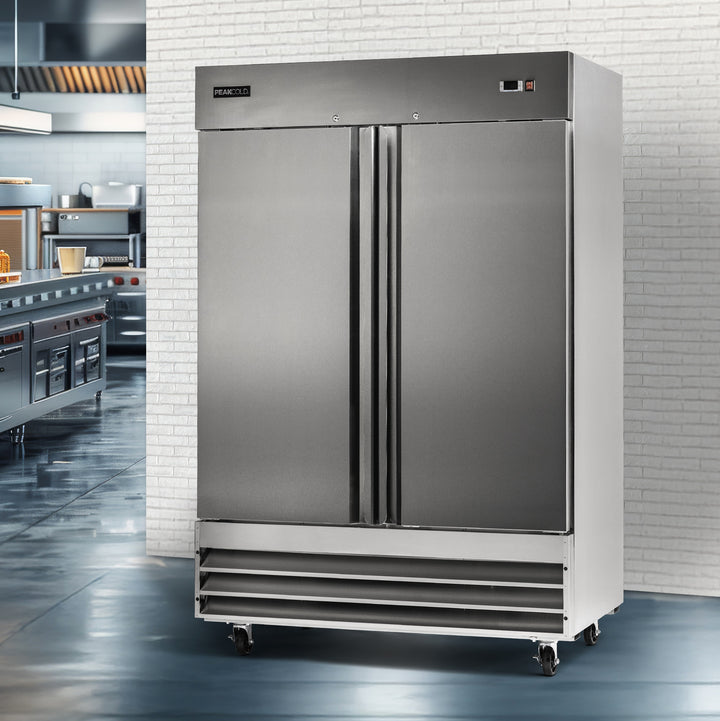
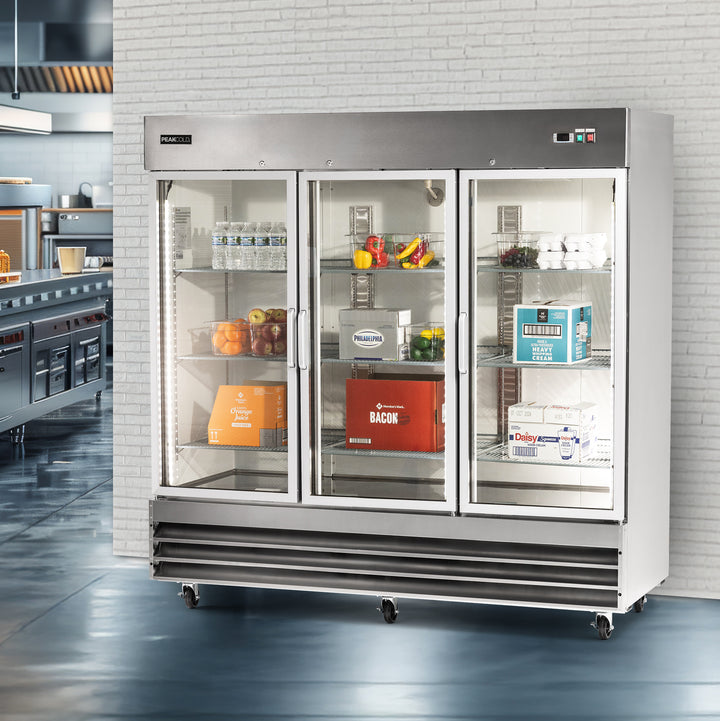
A commercial reach-in refrigerator is an upright, self-contained cabinet with the compressor, condenser, and evaporator built in. Standard cabinets run roughly 27 to 82 inches wide, 32 to 36 inches deep, and 78 to 84 inches tall in one, two, or three sections, holding about 20 to 75 cubic feet.
These cabinets hold food in the low 30s to around 40 degrees F, under the 41 degrees F cold holding ceiling in the FDA Food Code. Look for certification to NSF/ANSI 7, the NSF International standard covering materials, construction, and sanitation for commercial refrigerators and freezers.
What a Walk-In Cooler Is
A walk-in cooler is a refrigerated room assembled from insulated modular panels, typically 4 inches thick with a foamed-in-place urethane core. The Department of Energy defines it as an enclosed storage space you can walk into, held above 32 degrees F, with less than 3,000 square feet of chilled storage area. Prefab boxes start around 6 by 6 feet and scale up.
The box is only part of it. Add a condensing unit and evaporator, a floor panel or prepared slab, a condensate drain, dedicated electrical, and in most jurisdictions, building, electrical, and mechanical permits.
Reach-In Refrigerator vs Walk-In Cooler: Side by Side
|
Factor |
Reach-In Cabinet |
Walk-In Cooler |
|
Typical capacity |
About 20 to 75 cu ft (1 to 3 doors) |
6 by 6 ft and up, scales far beyond |
|
Footprint |
Roughly 6 to 18 sq ft of floor |
36 sq ft minimum, plus aisle and door swing |
|
Installation |
Uncrate, level, plug in |
Panels, refrigeration, drain, electrical |
|
Permits |
Rarely more than an electrical sign-off |
Building, electrical, and mechanical typical |
|
Equipment cost |
Roughly $1,500 to $7,000 per cabinet |
Commonly five figures installed |
|
Lead time |
Days |
Weeks to months |
|
If it fails |
One cabinet down, others keep running |
All cold storage down at once |
The Installed Cost Reality
Reach-in pricing is close to all-in. Single-door cabinets generally fall in a $1,500 to $3,000 band, two-door units around $2,500 to $5,000, and three-door units roughly $3,500 to $7,000. Glass doors and premium brands push the top end.
Walk-in math works differently. Panels account for most of the box material cost, the refrigeration system typically runs 30 to 40 percent of the project, installation labor commonly adds $2,500 to $7,500, and permit fees range from a few hundred dollars to more than a thousand. A mid-size 8 by 10 box lands roughly $9,000 to $22,000 installed. For heavier systems, our breakdown of industrial versus commercial refrigeration covers where the categories split.
The Decision Framework
Go With a Reach-In When
-
You run a single location and turn inventory weekly rather than buying in pallet quantities.
-
You lease your space and want equipment that leaves with you.
-
You cannot surrender 36-plus square feet of floor without cutting seats or prep space.
-
You want redundancy, since one compressor failure should not empty all your cold storage.
Go With a Walk-In When
-
You receive bulk produce or whole proteins by the pallet and break them down on site.
-
You supply multiple units from one commissary or central kitchen.
-
You run grocery, convenience, or catering volume where backstock outgrows three doors fast.
-
You own the building or hold a long lease and can amortize the build.
The crossover: once you need more than about 75 cubic feet in one place, and have the floor and lease to justify it, a walk-in starts making sense. Below that, stacking reach-ins is faster and cheaper.
How to Choose a Reach-In Refrigerator
Solid Doors vs Glass Doors
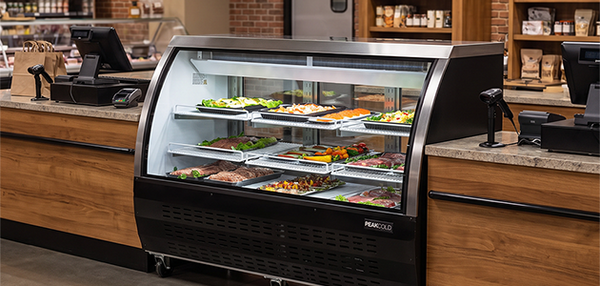
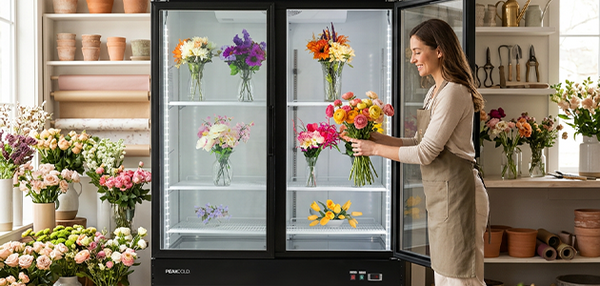
Solid doors insulate better, hold temperature during a rush, and cost less to run. Glass doors let staff and customers see product without opening anything, which suits grab-and-go. If display is the point, purpose-built retail display coolers do that job better.
One, Two, or Three Doors
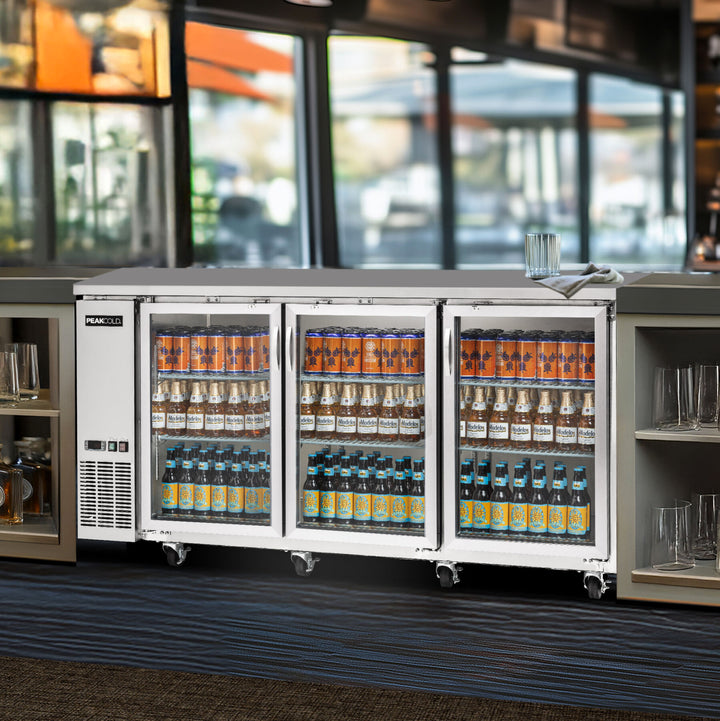
Size to your busiest prep day, not your average. One door suits a coffee shop or small bar. Two doors cover most independent full-service kitchens. Three doors fit high-volume line service. Our undercounter refrigerator buying guide covers the compact tier for line-side product.
Top-Mount vs Bottom-Mount Compressor
Top-mount units pull cleaner air, gain a little usable interior, and generally cost less, but they draw grease-laden steam on a cook line. Bottom-mount units are easier to service without a ladder, at the cost of some lower shelf space. Cook lines favor bottom-mount. Dry storage rooms favor top-mount.
Frequently Asked Questions
How many cubic feet is a commercial reach-in refrigerator?
Capacity tracks door count. Single section cabinets typically hold about 20 to 25 cubic feet, two section units roughly 40 to 50, and three section units around 65 to 75. Racking, shelf spacing, and compressor placement all shave usable volume, so compare listed capacity against the pan sizes you actually store.
Is a walk-in cooler cheaper than buying several reach-ins?
Not at small scale. Three reach-in cabinets often cost less than a modest installed walk-in once you count panels, the refrigeration system, labor, and permits. Walk-ins win on cost per cubic foot only at larger volumes, and that advantage grows the longer you occupy the space.
What temperature should a reach-in cooler hold?
Aim for roughly 35 to 38 degrees F for general food storage. That keeps product under the 41 degrees F cold holding limit even when doors open constantly during service. Freezers are a separate cabinet, not a compartment, and our commercial freezers run at zero degrees F and below.
Do I need a permit for a reach-in refrigerator?
Generally no. A reach-in is a plug-in appliance, so most operators only need a properly rated dedicated receptacle, which an electrician can add without a building permit in most jurisdictions. Walk-ins are different. The panels, refrigeration system, condensate drain, and dedicated circuit usually trigger building, electrical, and mechanical permits plus a health department sign-off before you can load product.
Sizing Your Cold Storage
Start with the volume you move in a week, add roughly 20 percent for growth and early deliveries, then pick the door count that covers it. An ENERGY STAR certified cabinet trims operating costs over the life of the unit. Compare specs across commercial refrigerators, including PeakCold and Procool cabinets in one-, two-, and three-door configurations, and if you are still narrowing the field, see our rundown of the best commercial refrigerator brands.