
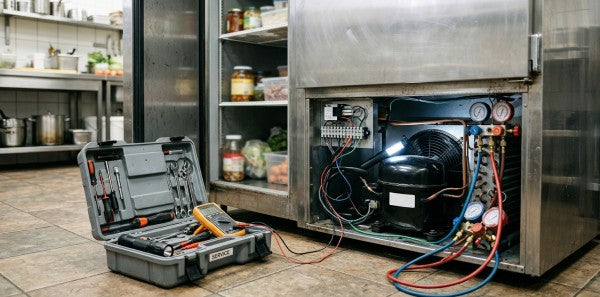
When a commercial refrigerator runs warm, the problem can spread beyond the unit. Food may become unsafe, service can slow down, and a small equipment fault can turn into lost inventory. The best response is to check the warning signs, protect stored products, and contact a commercial refrigerator repair service that understands business equipment.
The FDA advises keeping refrigerators at 40°F or below to slow bacterial growth.¹ Commercial kitchens, bars, bakeries, grocers, and retailers should treat a temperature problem as an operating issue, not a minor inconvenience.
This guide explains:
-
Which symptoms usually require commercial refrigerator repair
-
What to check before searching for commercial refrigerator repair near me
-
What to include when requesting reach in cooler repair
-
How to compare repair with replacement
-
What to expect from a local refrigeration specialist
Start With the Symptom, Not the Part
A warm commercial refrigerator does not always have one obvious failed part. The cause may involve airflow, a door gasket, a condenser, a fan, a control, or another part of the refrigeration system. A technician should diagnose the unit before recommending a repair.
Use this table as a first screen. It cannot replace an on-site diagnosis, but it can help you describe the problem clearly.
|
What you notice |
Equipment to check |
Possible issue area |
Best next step |
|
Cabinet is too warm |
Reach-in or worktop |
Airflow, condenser, control |
Protect products and request service |
|
Glass doors fog |
Merchandiser or display cooler |
Gasket, humidity, airflow |
Check the seal and schedule diagnosis |
|
Door will not close |
Reach-in or back bar |
Gasket, hinge, alignment |
Remove obstructions and request repair |
|
Compressor cycles often |
Most refrigerated units |
Control, airflow, heat load |
Record the pattern and call |
|
Compressor will not start |
Reach-in or undercounter |
Electrical part or control |
Do not keep restarting the unit |
|
Condenser fan is silent |
Self-contained unit |
Fan motor, power, control |
Keep the area clear and call |
|
Water pools at the base |
Refrigerator or display case |
Drain, pan, tubing |
Protect the floor and request diagnosis |
|
Unit makes a new noise |
Any refrigerator |
Fan, compressor, vibration |
Note the sound and arrange service |
|
Interior is icing over |
Reach-in or display cooler |
Airflow, defrost, gasket |
Limit door openings and call |
|
Display seems incorrect |
Unit with controller |
Sensor, controller, calibration |
Compare it with a thermometer |
A refrigerator that is running is not necessarily working correctly. Confirm the actual temperature with an appropriate thermometer. Then follow your food-safety procedures while you arrange help. The FDA also advises avoiding overpacking because cold air must circulate around refrigerated food.¹
When Commercial Refrigerator Repair Is the Safer Choice
Call for commercial refrigerator repair when the unit cannot hold its required temperature, cycles abnormally, leaks, ices over, or makes a new mechanical noise. A cracked or loose door gasket also deserves attention. It can let warm, humid air into the cabinet and increase the load on the system.
Do not treat repeated power cycling as a repair. It may hide the symptom for a short time while the underlying problem continues. For electrical, mechanical, or refrigerant-related issues, keep the unit closed as much as possible and use a qualified commercial refrigeration technician.
The EPA requires technicians who maintain, service, repair, or dispose of equipment that could release regulated refrigerants to hold Section 608 certification.² Ask who will perform the work before you approve a refrigerant-related repair.
|
A service call is usually warranted when |
A basic check may help when |
|
The unit is above its required temperature |
A product or shelf blocks the door |
|
The compressor or fan will not run |
The setpoint changed by mistake |
|
The door gasket is split or loose |
The condenser area needs clearing |
|
Water returns after a drain check |
The unit needs routine cleaning |
|
The unit short-cycles or shuts off |
A display needs comparison with a thermometer |
|
A new noise or vibration has appeared |
The surrounding area has restricted airflow |
These checks should not involve opening electrical panels, bypassing controls, adding refrigerant, or disassembling the system. Commercial equipment has higher operating demands than a household refrigerator. An incorrect adjustment can create a larger failure.
What a Commercial Refrigerator Repair Service May Cover
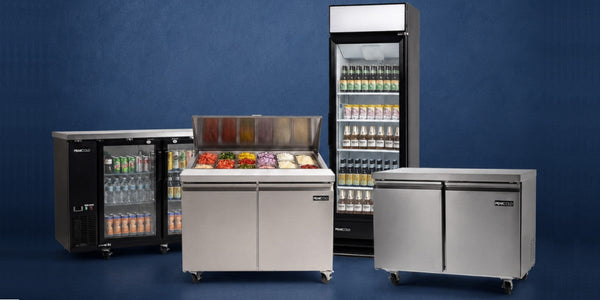
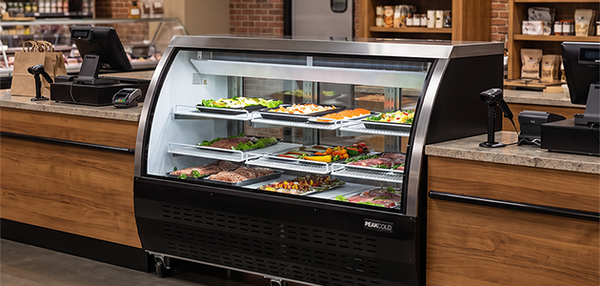
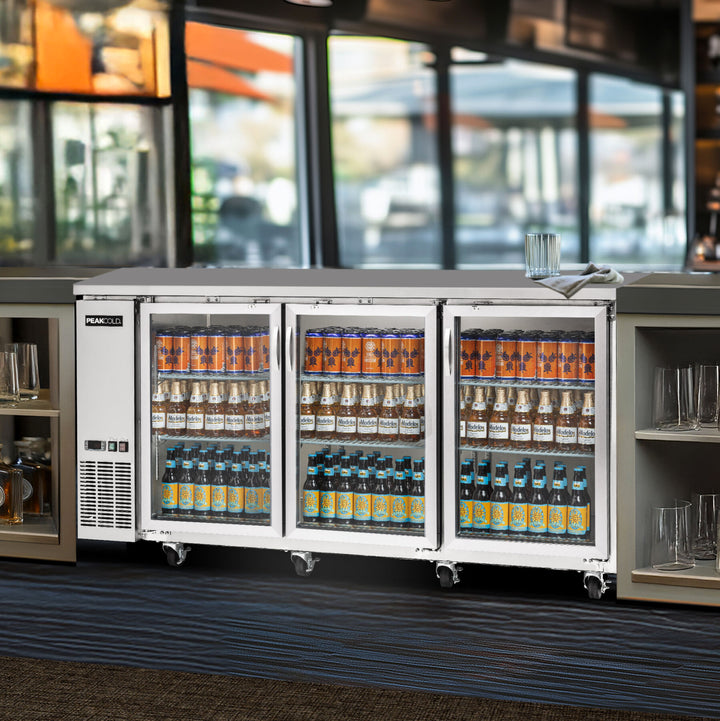
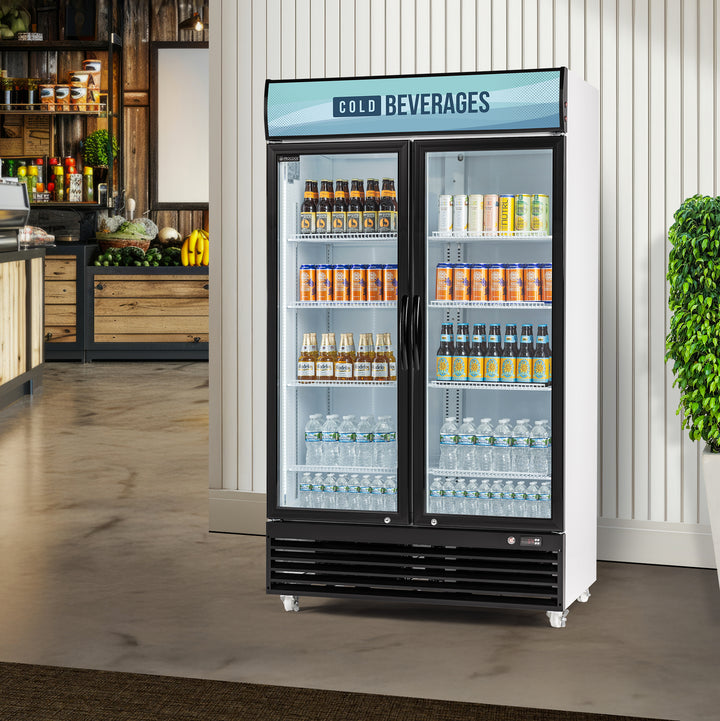
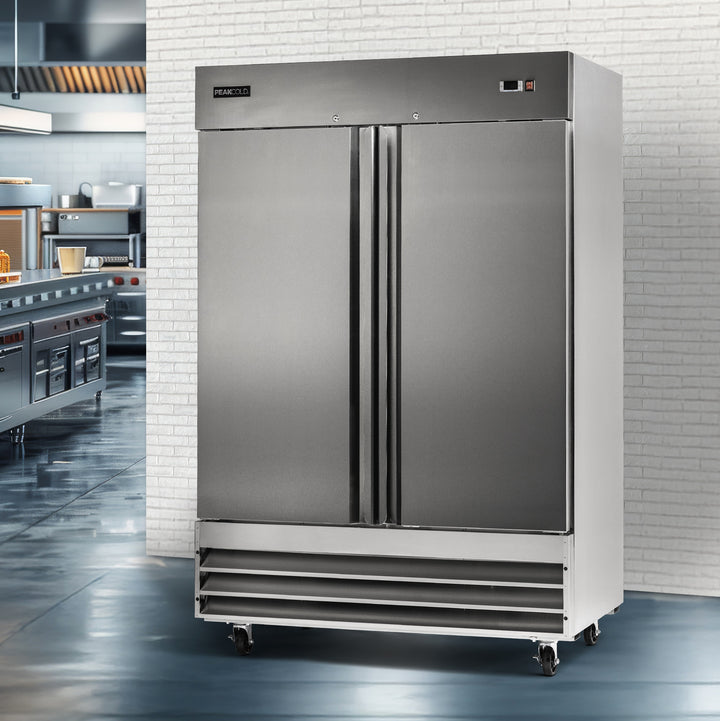
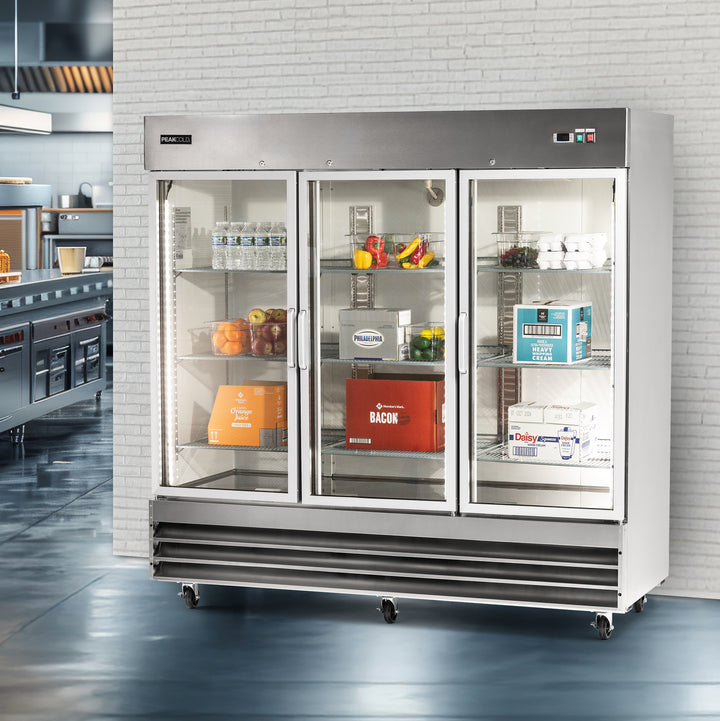
Commercial refrigeration includes more than a standard upright refrigerator. A restaurant may rely on reach-ins, undercounters, worktops, prep tables, back bars, beverage coolers, and glass-door merchandisers at the same time. A bakery or deli may also use display cases. A specialty business may need wine, medical, or other temperature-controlled equipment.
Iron Mountain Refrigeration lists service for commercial refrigerators, freezers, bar refrigeration, display refrigeration, walk-in units, ice makers, specialty units, and related components.³ Its published equipment list includes reach-in refrigerators, undercounter refrigerators, worktops, back-bar coolers, beverage merchandisers, display cases, prep tables, and replacement doors or gaskets.
When requesting reach in cooler repair, include the number of doors and whether they are solid or glass. Also provide the make, model, business location, symptoms, error codes, and temperature readings. These details help a service team confirm whether the equipment and address fit its capabilities.
|
Business type |
Common equipment |
Details to provide |
|
Restaurant |
Reach-in, prep table, undercounter |
Door count and product temperature |
|
Bar or tavern |
Back bar, bottle cooler, kegerator |
Beverage temperature and door type |
|
Bakery or deli |
Display case, reach-in, worktop |
Case style and condensation |
|
Grocery or convenience store |
Merchandiser, reach-in, display cooler |
Product zone and cabinet temperature |
|
Retail business |
Glass-door merchandiser |
Display type and airflow pattern |
|
Specialty operation |
Wine or medical refrigerator |
Required range and model number |
The goal is not to guess the failed part from a symptom. The goal is to give the technician enough context to diagnose the unit safely and recommend the next step.
How to Find Commercial Refrigerator Repair Near Me
A search for commercial refrigerator repair near me should produce more than a list of phone numbers. Before scheduling, confirm four details: service territory, equipment experience, technician credentials, and the process for parts or warranty support.
Iron Mountain is based in Pleasant Prairie, Wisconsin. Its published service area includes Kenosha County, Racine County, eight communities in Lake County, Illinois, and parts of southern Milwaukee County. The company generally serves locations within about 40 miles of its headquarters, with availability depending on the address, equipment, and schedule.³
The company also identifies an EPA-certified technician, service for all major commercial refrigeration brands, and a 55,000-square-foot warehouse with parts kept nearby when possible.³ Its published business hours are Monday through Friday, 9 a.m. to 4 p.m. Central Time.⁴ The service page says the team follows up within one business day, so businesses should confirm timing before assuming after-hours coverage.³
|
Question to ask |
Why it matters |
What to document |
|
Do you service my address? |
A nearby provider may have a limited territory |
Business address and city |
|
Do you work on my equipment type? |
Units can fail in different ways |
Equipment category and door count |
|
Can you service my brand? |
Parts and controls vary by maker |
Make, model, and serial number |
|
Who will diagnose the unit? |
Refrigerant work has credential rules |
Technician or credential details |
|
Are parts stocked locally? |
Availability affects downtime |
Common parts and lead time |
|
What if repair is not economical? |
Replacement may be the better choice |
Written recommendation and options |
Iron Mountain’s positioning is different from a general kitchen-supply company. The company focuses on refrigerated products and maintains a dedicated service technician, in-house warranty support, and parts inventory. Its current credentials page also reports a 5.0 Google rating and an A+ BBB rating.⁵
Repair or Replace a Commercial Refrigerator?
Repair is often worth considering when the cabinet is sound, the equipment still fits the business, and the failed component can be replaced at a reasonable cost. Replacement deserves more attention when the unit has repeated failures, major cabinet or compressor problems, poor capacity, or a repair cost that approaches the price of a suitable new unit.
Compare more than the invoice. Consider product risk, lost production, repeat service calls, energy use, expected remaining life, and the effect of downtime on customers. A small repair may be right for a reliable unit. A recurring failure may justify replacement before the next busy service period.
|
Repair may make sense when |
Replacement may make sense when |
|
The cabinet and insulation remain sound |
The cabinet has major damage or corrosion |
|
The unit has one isolated failure |
The unit has repeated breakdowns |
|
The repair restores suitable capacity |
The unit no longer meets business demand |
|
Parts are available without a long delay |
Key parts are obsolete or difficult to source |
|
Downtime is limited and predictable |
Downtime keeps disrupting service |
|
The expected repair cost is reasonable |
Repair cost approaches replacement cost |
Ask the technician to separate the immediate repair from the long-term recommendation. That distinction can restore cooling now while keeping the equipment’s total operating cost in view.
What to Do Before the Technician Arrives
Your first priority is product protection. Follow your food-safety plan, limit door openings, record the cabinet temperature, and separate questionable product according to your procedures. Do not rely on appearance alone to decide whether food is safe.
Next, write down what changed. Note when the problem began, whether the unit is warm everywhere or only in one section, whether the compressor or fans run, and whether you see water, frost, or an error code. Take a photo of the data plate and control display if it is safe to do so.
Finally, clear access to the equipment. A technician needs room to inspect the condenser, evaporator area, doors, controls, and airflow around the unit. Avoid moving electrical connections or trying to add refrigerant yourself.
|
Before the visit |
What to record |
|
Protect stored products |
Temperature and time of the issue |
|
Keep doors closed |
Warm, cold, or uneven cabinet zones |
|
Check the display |
Error codes or alarm messages |
|
Look for visible issues |
Water, frost, noise, or vibration |
|
Photograph the data plate |
Brand, model, and serial number |
|
Clear the work area |
Access around the unit and condenser |
FAQ About Commercial Refrigerator Repair
|
Question |
Short Answer |
|
When should I call? |
When the unit is warm, leaking, icing, noisy, or cycling abnormally |
|
Does Iron Mountain handle reach-in units? |
Yes, its published list includes reach-in refrigerators |
|
Can it service equipment it did not sell? |
Confirm the brand, model, and service address first |
|
What if repair is not economical? |
Ask for a repair-versus-replace recommendation |
|
What if I am outside the service area? |
Ask about troubleshooting, parts, or a referral |
What if my business is outside the regular service area?
Contact the provider with your location and equipment details. Iron Mountain says it may be able to help with troubleshooting, parts, replacement equipment, warranty coordination, or a referral outside its regular territory.³
Commercial refrigerator repair is not only about getting a compressor or fan running again. It is about protecting food, reducing downtime, and choosing a repair that makes sense for the equipment and the business. If your restaurant, bar, bakery, grocery store, or retail operation is in Iron Mountain’s Southeast Wisconsin or Lake County service area, describe the symptoms, equipment, and location so its team can confirm the next step. Request Commercial Refrigerator Repair from Iron Mountain
Last updated: October 14, 2026.
Sources
-
U.S. Food and Drug Administration, “Refrigerator Thermometers: Cold Facts about Food Safety.”
-
U.S. Environmental Protection Agency, “Section 608 Technician Certification.”
-
Iron Mountain Refrigeration & Equipment, “Commercial Refrigeration Repair in Southeast Wisconsin & Lake County, IL.”
-
Iron Mountain Refrigeration & Equipment, “About Iron Mountain Refrigeration.”
-
Iron Mountain Refrigeration & Equipment, “Iron Mountain Refrigeration Reviews, Awards & Industry Credentials.”