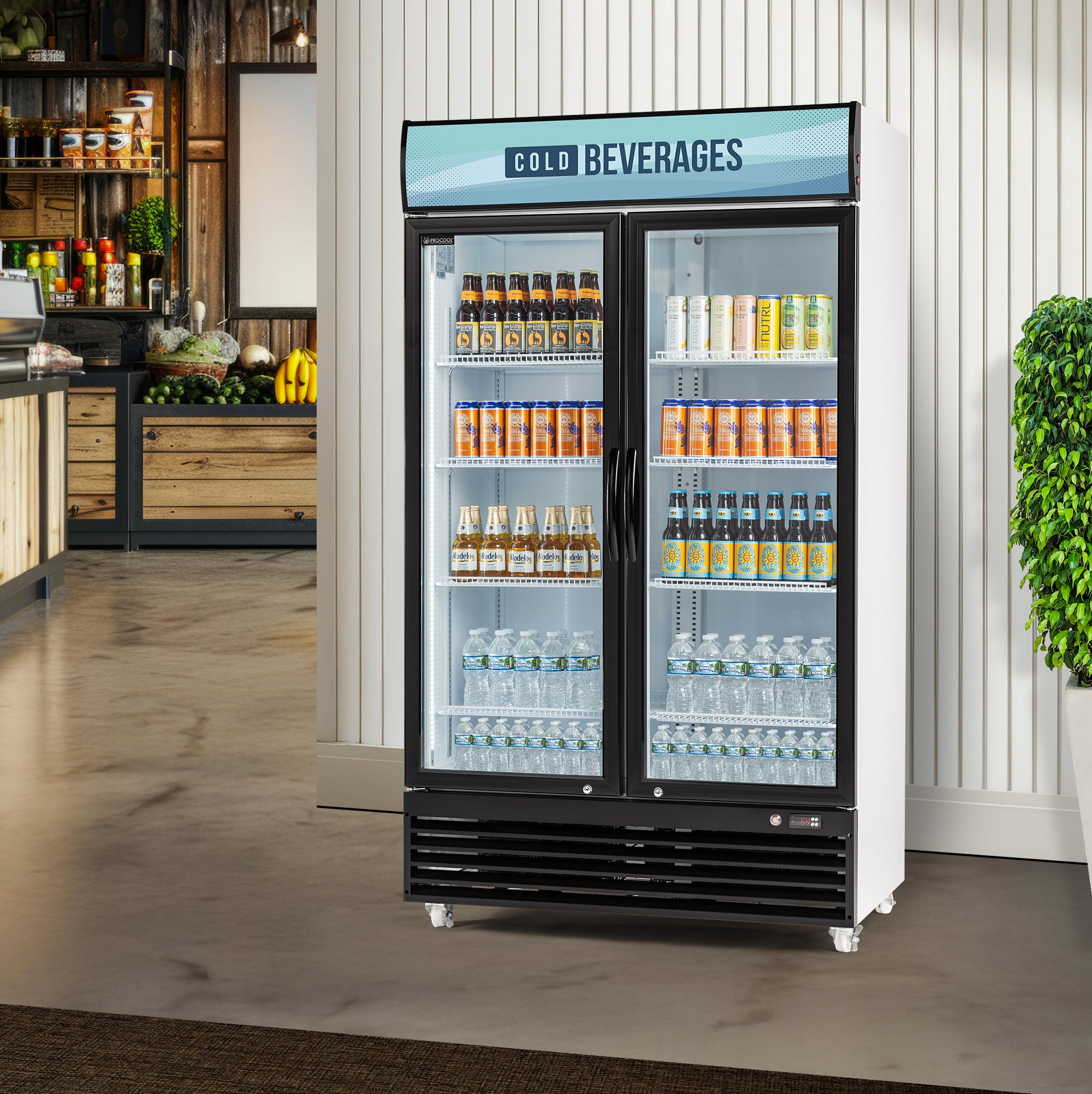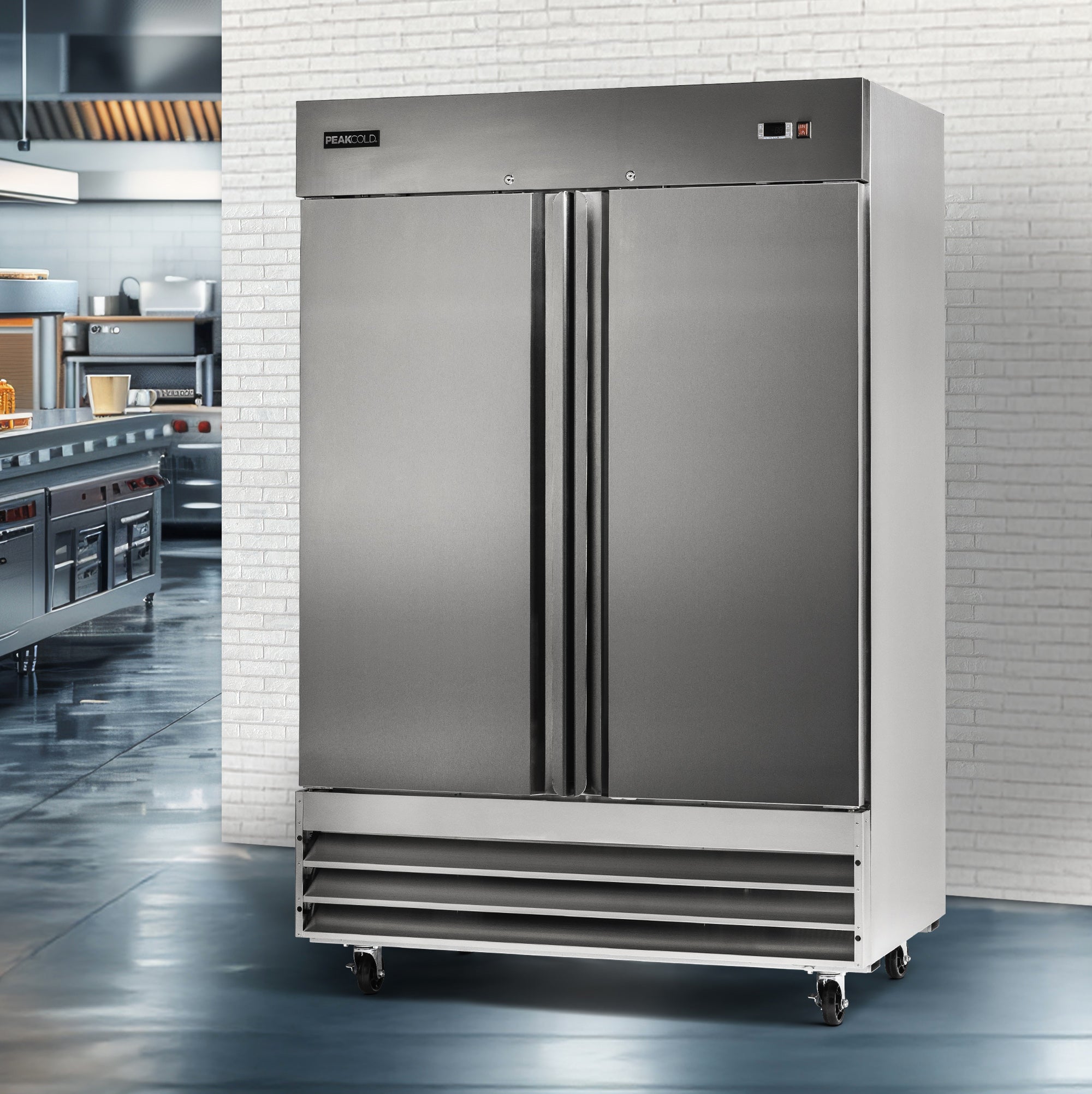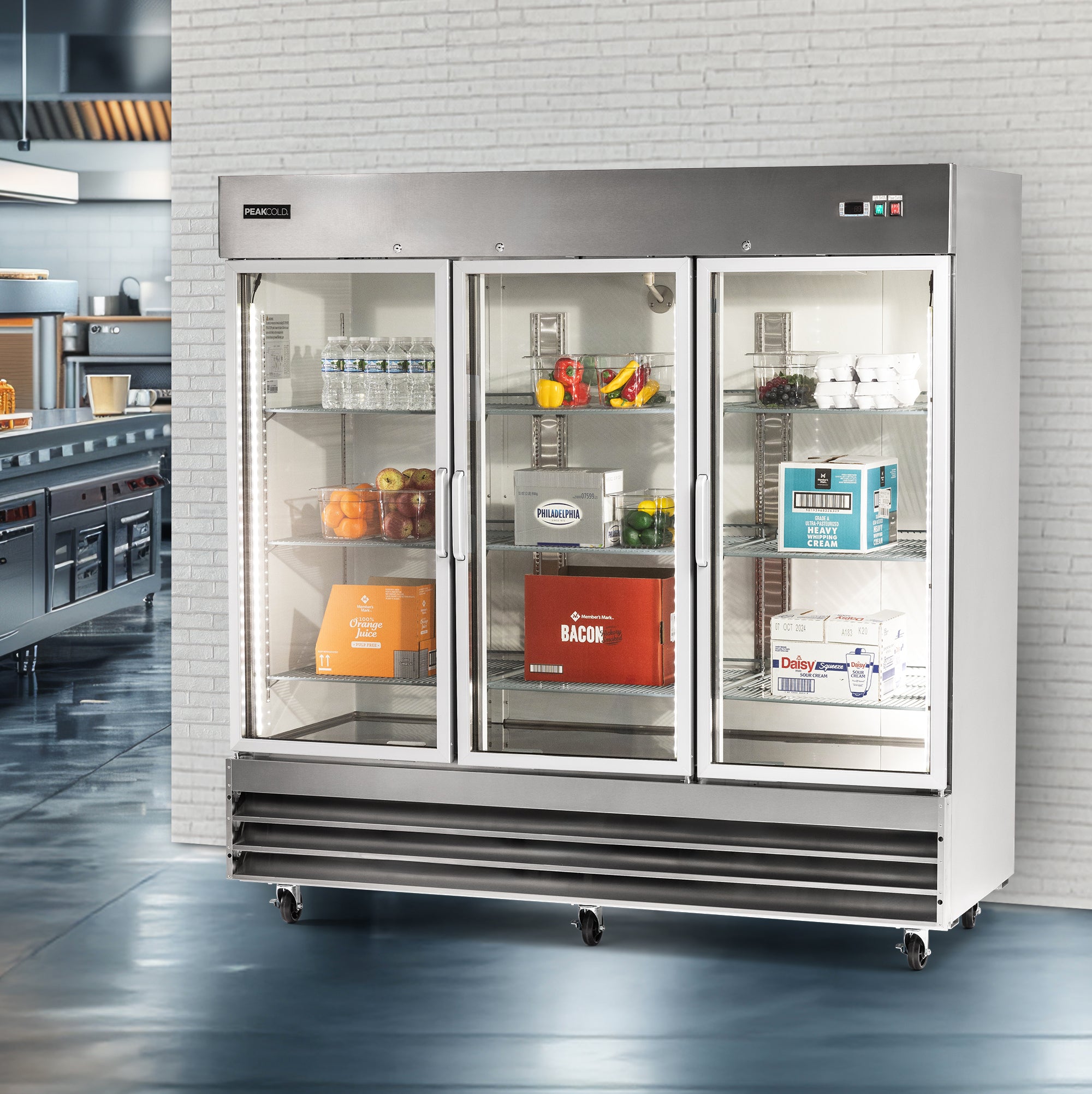

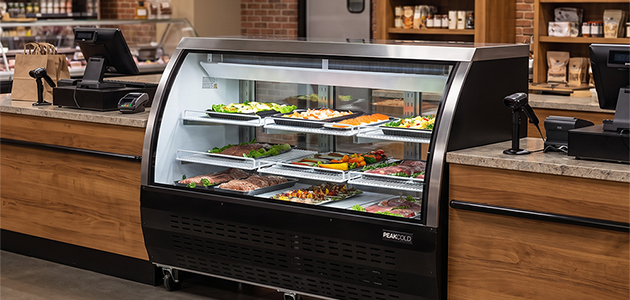
A meat display case is a refrigerated merchandiser built to hold fresh cuts at 41 degrees F or below, the cold holding ceiling in the FDA Food Code. Most butchers run colder, targeting 32 to 36 degrees F for fresh red meat, because color and shelf life fall off as product warms. The buying decision comes down to four things: service or self-service, gravity coil or forced air, lighting, and linear feet.
Meat Case Temperature: The Number That Drives Everything
USDA guidance on refrigeration and food safety puts the recommended refrigerator temperature at 40 degrees F or below. Treat that as a ceiling, not a target. Spoilage bacteria on chilled beef grow roughly twice as fast at 41 degrees F as they do near 32 degrees F, so the few degrees you shave off the setpoint buy real shelf life.
What matters is product temperature, not the controller reading. A case showing 34 degrees F can still hold 40 degree steaks if the deck is overloaded. Spot-check with a calibrated probe.
|
Product and case type |
Operating target |
|
Fresh red meat, full-service |
32 to 36 degrees F |
|
Ground meat and poultry, service |
30 to 34 degrees F |
|
Fresh seafood on drained ice |
30 to 34 degrees F |
|
Packaged meat, self-service |
34 to 39 degrees F |
|
Cured meats and cheese |
36 to 40 degrees F |
|
Frozen meat merchandiser |
0 degrees F or below |
The Food Code does allow time in place of temperature control, but only under written procedures: product starts at 41 degrees F or below, gets time marked, and is discarded four hours later. Log case temperatures at least twice a shift.
Service Cases vs Self-Service Meat Display Cases
Full-service cases
A full-service case puts staff between the customer and the product: glass on the customer side, sliding access behind. This is the format for custom cuts, dry-aged beef, and house sausage. Service counters draw larger baskets and move premium cuts.
Self-service cases
Self-service means prepackaged product in an open or glass-door merchandiser. It costs less to staff and moves volume faster, but open air coolers shed cold air on every reach-in.
-
Choose service if your margin comes from cutting, aging, or expertise.
-
Choose self-service if traffic is fast, repetitive, and price-driven.
-
Run both if the floor plan allows a side-by-side layout.
Gravity Coil vs Forced Air
This is the most consequential spec on a butcher display case.
Gravity coil cases mount the evaporator at the top and let chilled air fall over the product. Airflow is gentle, humidity stays high, and surface drying is minimal. Reported shrink commonly runs 1 to 2 percent over 24 hours, against 3 to 5 percent or more for forced air. On unwrapped cuts that gap becomes trim loss and gray edges.
Forced air cases push air across the deck with fans. They cool faster, recover quicker after openings, and hold even temperatures end to end, which suits packaged meat and cheese. Our breakdown of deli versus bakery cases goes deeper.
Why Lighting Matters More for Meat Than for Anything Else
Shoppers judge meat by color before they read a label. Fresh cut beef is purplish until it blooms in oxygen and turns bright red, then browns as myoglobin oxidizes.
Specify LEDs with a color rendering index of 90 or higher and an R9 value (the deep red band) of 80 or better. Weak R9 makes fresh beef read gray. Overcorrecting hurts too: lamps that dump excess red make product look artificially pink, and shoppers who get home to something duller do not come back.
Glass Style, Sizing, and Layout
Curved glass gives a fuller, traditional deli look and more visible product height. Straight or angled glass cleans easier and reads more modern. Low-profile cases preserve sightlines; full-height cases hold more. Similar logic applies to sweets, covered in our bakery display case guide.
Cases sell by width and gang end to end. Common widths run roughly 36 to 82 inches, most models 30 to 40 inches deep and 47 to 55 inches tall. Plan in linear feet:
-
Count daily SKUs and allow one to two facings each.
-
Budget roughly 8 to 12 linear feet for a small butcher shop or market counter.
-
Add length before stacking height, since overloaded decks lose temperature control.
-
Confirm electrical. Self-contained cases usually want a dedicated circuit.
Expect roughly $2,000 to $8,000 per case depending on size and finish.
Drainage, Cleaning, and Separating Raw Product
Meat cases generate liquid: condensate, purge, melting ice. Confirm whether yours drains to a pan or needs a plumbed gravity line, and check that the floor slope carries it. A blocked drain is an inspection finding waiting to happen.
-
Wash pans, decor strips, and glass on a set schedule, not when they look dirty.
-
Separate raw animal foods by type. The Food Code requires beef, pork, poultry, and fish to be kept apart from each other and from ready-to-eat food during display.
-
Never display raw meat above ready-to-eat items such as cheese or salads.
-
Use dedicated, color-coded pans per protein.
-
Rotate by cut date. The FoodSafety.gov cold food storage chart allows 1 to 2 days for raw ground meat and poultry and 3 to 5 days for steaks, chops, and roasts.
Our guide to commercial fridge organization applies the same logic to reach-in storage.
Frequently Asked Questions
What temperature should a meat display case be set to?
Hold product at 41 degrees F or below to satisfy the FDA Food Code. Most butchers set fresh red meat cases to 32 to 36 degrees F, and ground meat and poultry closer to 30 to 34 degrees F. Verify with a probe thermometer in the product, not the air.
Is a gravity coil or forced air meat case better?
Gravity coil suits unwrapped fresh red meat and seafood, because gentle falling air keeps humidity high and limits surface drying and shrink. Forced air recovers faster after openings and holds even temperatures across the deck, making it the better pick for packaged meat and cheese.
How many linear feet of meat case do I need?
Count active SKUs, allow one to two facings each, and size from there. A small butcher shop or specialty market commonly starts around 8 to 12 linear feet, built from cases roughly 36 to 82 inches wide ganged together. Add length rather than stacking higher.
Why does my meat look gray in the display case?
Two causes dominate. Lighting with a color rendering index under 90, or a weak deep-red R9 value, strips red tones and makes fresh product look dull. The other is surface oxidation and drying, usually from forced air crossing unwrapped cuts or product held too warm.
Choosing the Right Meat Display Case for Your Shop
Start with airflow, since it is the one spec you cannot change later. Set a temperature target below the code ceiling, specify high-CRI lighting, and size the run to your SKU count. Browse refrigerated deli and meat cases from PeakCold, or retail display coolers for packaged self-service.