
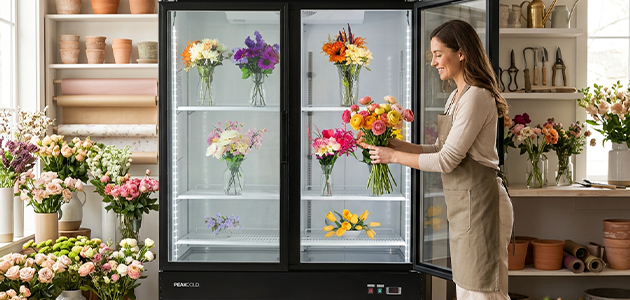
Hold most cut flowers in a florist cooler at 34 to 38 degrees F, with 80 to 90 percent relative humidity and gentle, indirect airflow. The exceptions are chilling-sensitive tropicals such as orchids, anthurium, bird of paradise, and ginger, which want roughly 55 degrees F. Temperature, humidity, and air movement decide whether inventory lasts five days or twelve.
Flower Cooler Temperature by Flower Type
Cold slows respiration, and slow respiration means slow aging. Respiration climbs sharply with warming, so a case drifting from 36 to 45 degrees F can halve vase life. The USDA's Agricultural Marketing Service covers ornamental crop handling.
|
Flower or category |
Holding temperature |
Notes |
|
Roses, carnations, chrysanthemums |
34 to 38 degrees F |
Workhorse setting |
|
Lilies, gerbera, hydrangea, snapdragon |
34 to 38 degrees F |
Several are ethylene sensitive |
|
Tulips and other bulb flowers |
32 to 35 degrees F |
Tolerate the cold end |
|
Orchids (dendrobium, phalaenopsis) |
50 to 55 degrees F |
Cold below 50 degrees F drops florets |
|
Anthurium, ginger, heliconia |
55 to 60 degrees F |
Chilling turns bracts gray or black |
|
Bird of paradise |
50 to 55 degrees F |
Hardiest of the tropicals, still not a cooler flower |
Chilling Injury Does Not Reverse
Chilling injury shows as bruising or blackening on petals and bracts, and it often appears only after the stem warms up at the customer's house. The damage happens in your cooler; the complaint arrives two days later. Hold tropicals separately.
Why Humidity Should Sit at 80 to 90 Percent
A cut stem loses water through petals and leaves whether or not it is drinking, and dry air speeds that loss. Food refrigeration runs near 30 to 50 percent relative humidity, which is why blooms held in a kitchen reach-in go limp and brown within a day.
Target 80 to 90 percent. Higher invites condensation, botrytis, and slimy bucket water. Droplets on the blooms mean humidity is too high.
Why a Florist Cooler Is Not a Food Cooler
This is the costliest mistake in the category. Our guide to coolers versus refrigerators covers the broader distinctions. For flowers, four differences matter:
-
Airflow. A floral cooler uses low-velocity evaporators and baffles that deflect air rather than blasting shelves. Food units move air fast, which desiccates and wind-burns petals.
-
Humidity. Floral units hold moisture in. Food units shed it, because condensation on packaged product is a sanitation issue.
-
Corrosion protection. Constant humidity is hard on coils, so good units use coated evaporators.
-
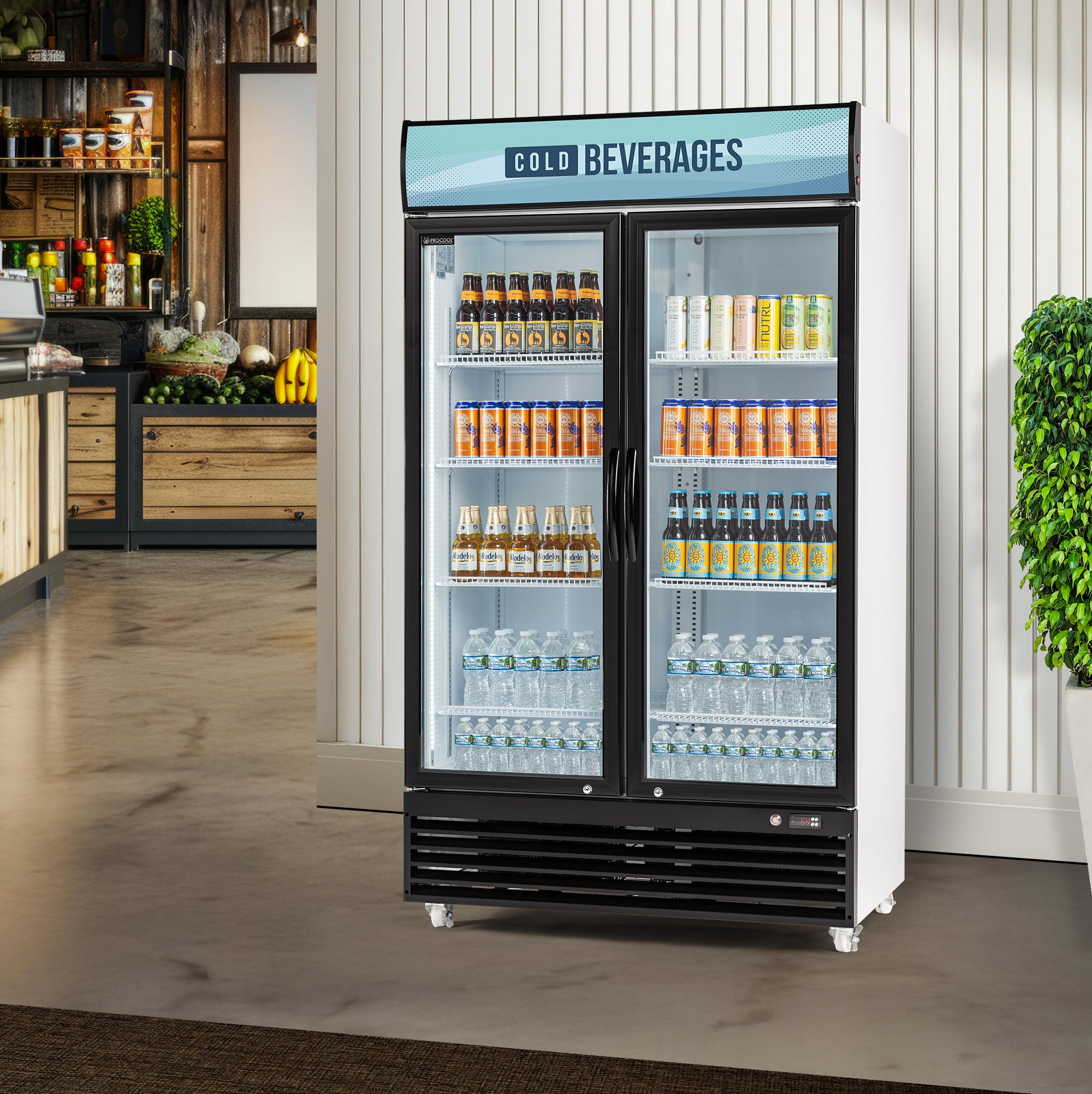
Merchandising. Glass doors and interior LEDs are standard on a floral display cooler, because the case is your storefront.
If the unit will ever hold food, confirm it carries an NSF listing under the commercial refrigerator standard.
Keep Fruit and Produce Out of the Box
Ripening fruit releases ethylene gas, the fastest way to ruin a cooler full of flowers. Carnations, delphinium, snapdragons, and sweet peas react at concentrations measured in parts per billion, dropping buds within a day. Keep produce, dying blooms, and fruit cartons out, and make sure a supermarket floral case does not share return air with produce. Our convenience store cooler guide covers zoning in mixed retail cases.
Air Circulation and Loading
Overpacking is the second most common problem after dry air. Air must reach every bucket, or the middle of the load sits warm.
-
Leave two to three inches between buckets, and never block the evaporator discharge or return.
-
Keep the top shelf clear of the fan housing.
-
Rotate stock front to back daily.
-
Load warm deliveries in stages, not all at once.
Display Cases Versus Back-of-House Storage
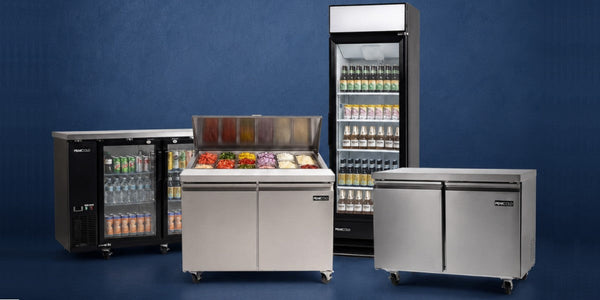
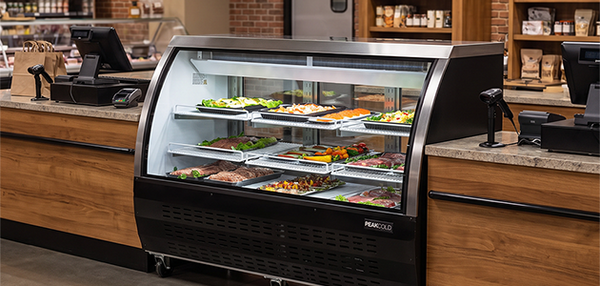
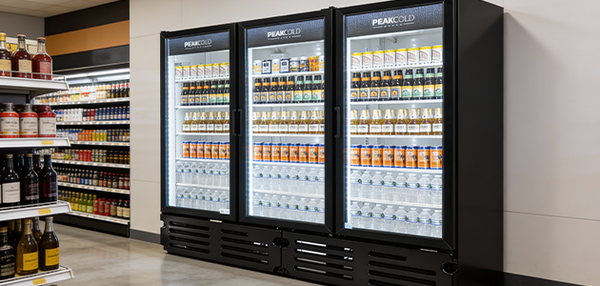
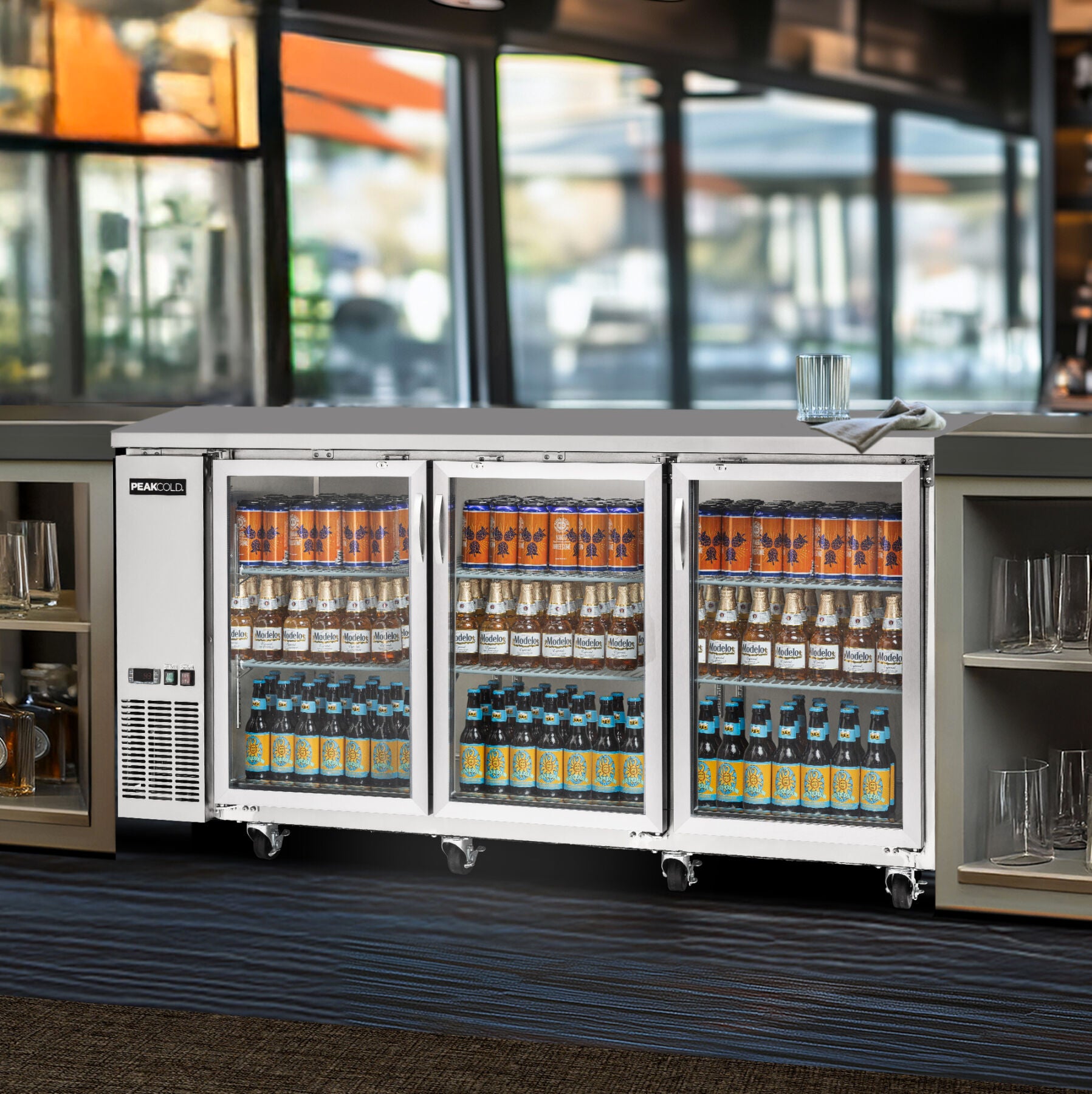
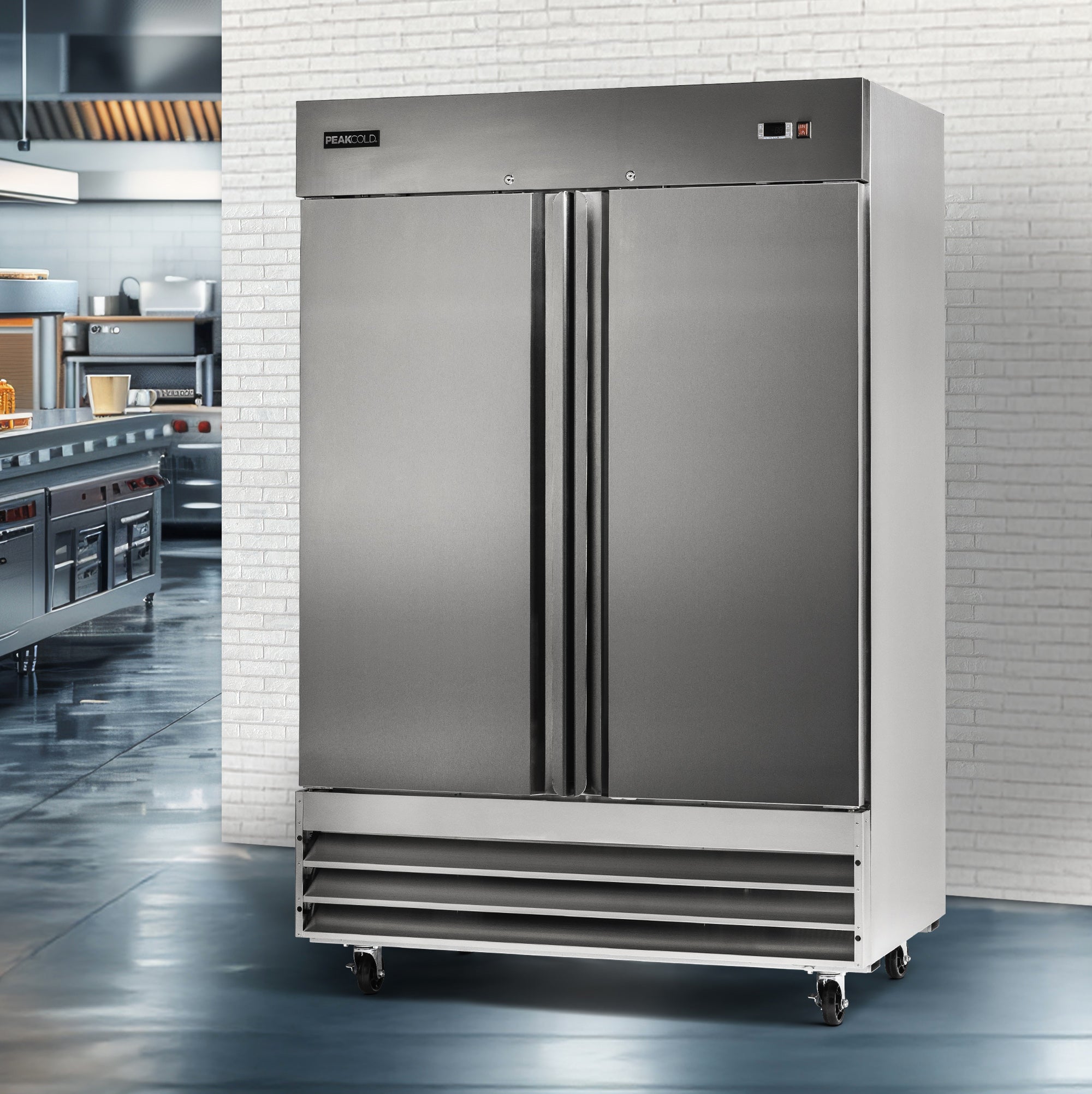
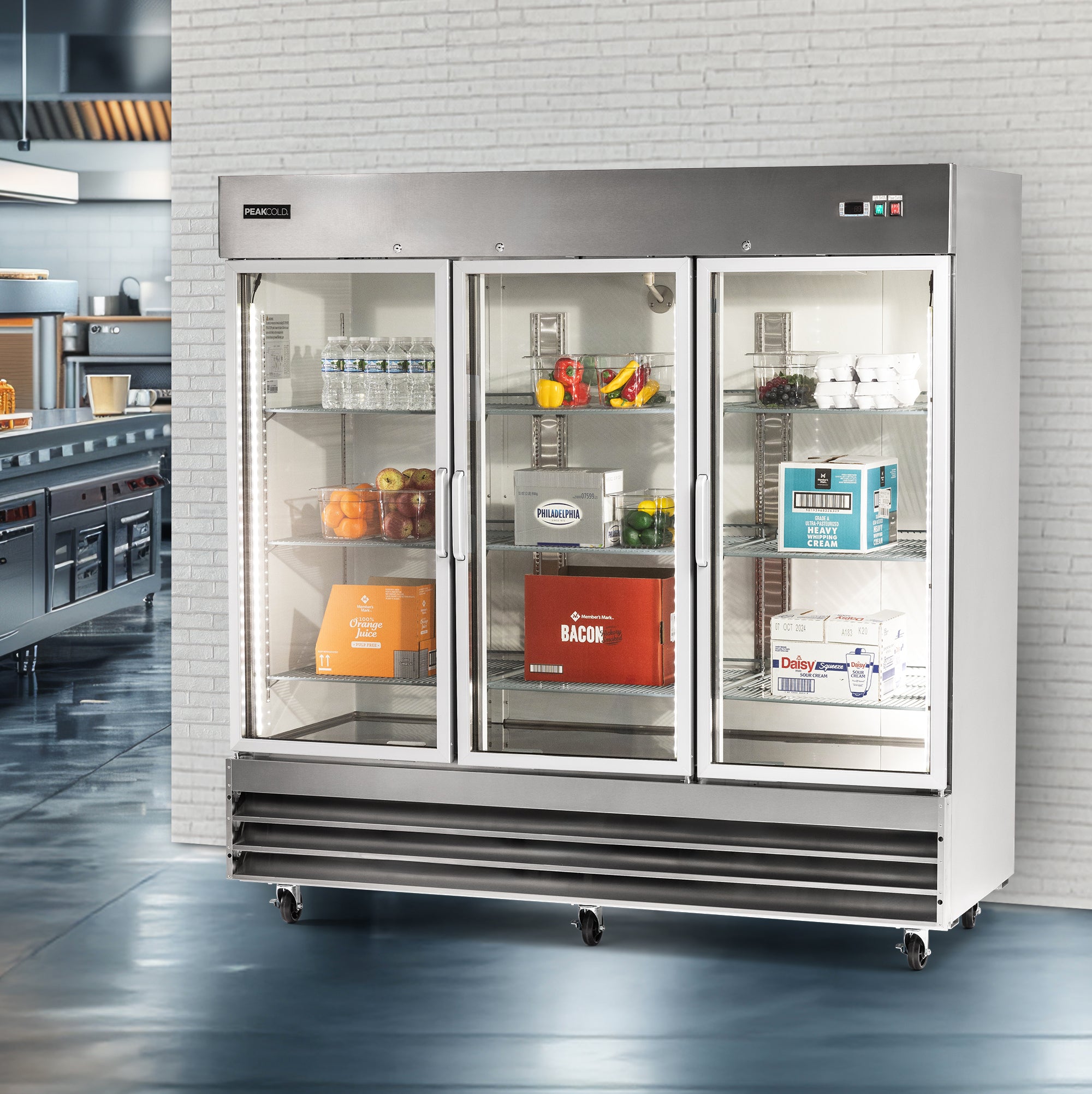
Most shops run both: a glass-door flower refrigerator out front for impulse sales, plus solid-door space in back for processing. Compare single-door merchandisers against wider builds in our floral display coolers range.
Sizing by Bucket Count and Width
Single-door floral cases run roughly 24 to 30 inches wide with about 12 to 20 cubic feet inside. Two-door models land near 47 to 54 inches and 35 to 43 cubic feet. Three-door cases reach 70 to 80 inches and 50-plus cubic feet. A standard bucket is 8 to 10 inches across the rim, so plan two to three per 24 inches of shelf width. Buy one size up; Valentine's Day will fill it.
LED Lighting and Color Rendering
Interior LEDs sell flowers and run cooler than the fluorescent tubes older cases used. Look for a color rendering index of 90 or higher. Reds and pinks are the hardest colors to reproduce, and low-CRI light makes a rose read brown behind glass. Efficient lighting also factors into ENERGY STAR commercial food service guidance.
Daily and Weekly Maintenance
Daily: change bucket water, re-cut aging stems, pull spent blooms and dropped foliage (decaying material releases ethylene), and check a thermometer and hygrometer against the controller.
Weekly: scrub buckets with sanitizer to kill the bacterial film that plugs stems, clear the condensate drain, wipe the door gasket, and inspect the condenser. Dust chokes capacity fast, and dirty refrigerator coils explain many warm-case complaints.
Frequently Asked Questions
What temperature should a flower cooler be set to?
Set it to 34 to 38 degrees F for roses, carnations, mums, lilies, and most temperate cut flowers. Bulb flowers such as tulips do well at 32 to 35 degrees F. Tropicals including orchids, anthurium, ginger, and bird of paradise need roughly 55 degrees F to avoid chilling injury.
Can I use a regular refrigerator to store flowers?
Not well. A food refrigerator moves dry air at high velocity, near 30 to 50 percent relative humidity, so petals dehydrate and brown within a day. A florist cooler holds 80 to 90 percent humidity with gentle indirect airflow. Overnight holding is fine; standing inventory will cost you.
How many buckets fit in a florist cooler?
Count shelf area rather than cubic feet. A typical bucket is 8 to 10 inches across, so a 24-inch shelf holds two to three with room for air. A single-door case usually handles a dozen to twenty small buckets, and wider cases scale with width. Leave gaps for circulation.
Why are my flowers wilting inside the cooler?
Check four things in order: air that is too dry, airflow blowing directly on blooms, ethylene from fruit or decaying material, and dirty bucket water. Overpacking creates warm pockets that mimic all of these. A case that cannot hold setpoint usually has a gasket or condenser fault.
Choosing the Right Florist Cooler for Your Shop
Decide first whether the case is selling or storing, since that drives glass versus solid door and lighting. Then size for your busiest week, not your average one. If you are weighing a florist cooler for sale against general merchandisers, our floral display coolers from PeakCold and Procool, and our specialty refrigeration categories show the difference.