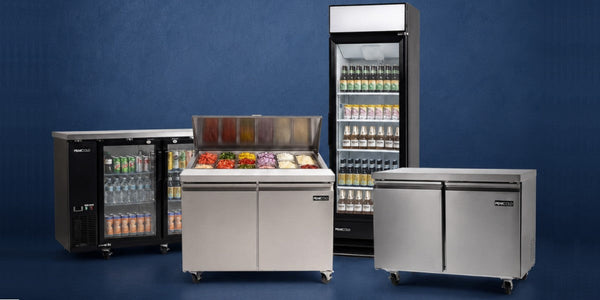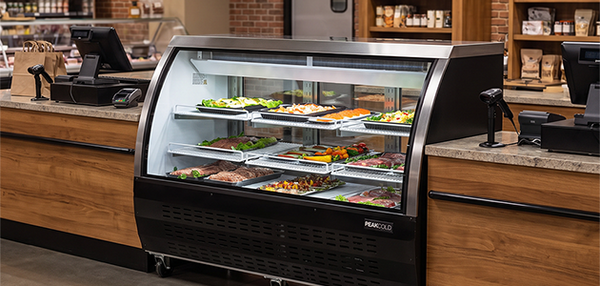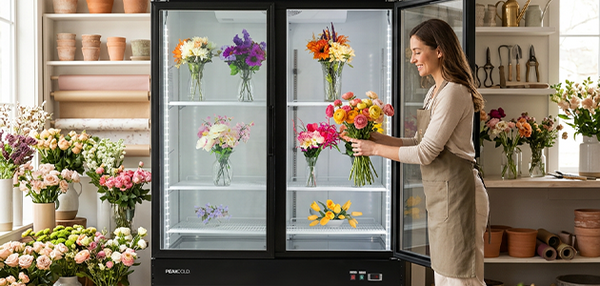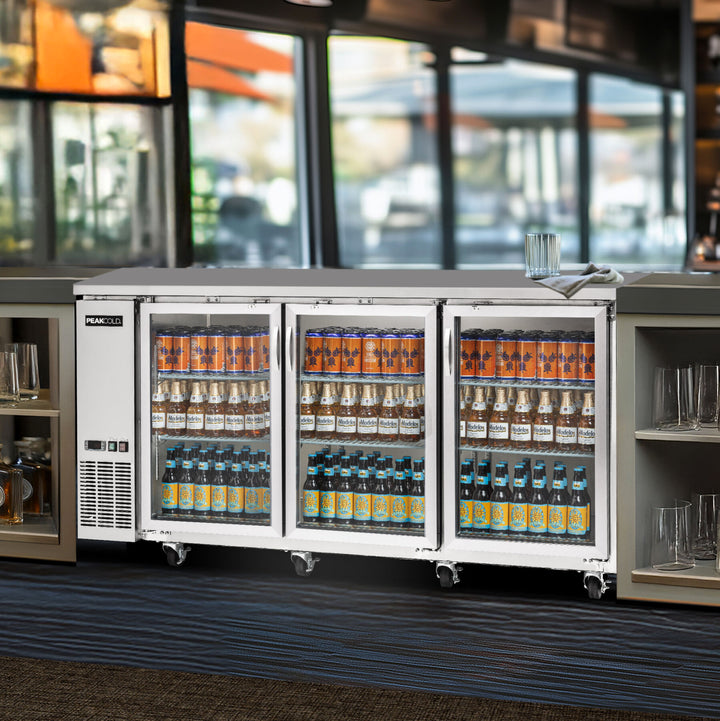


Nothing slows down a sandwich or pizza line faster than a cook leaving the station to grab backup product from the walk-in mid-rush. A refrigerated prep table solves that by combining a chilled pan rail on top with a refrigerated cabinet underneath, so a cook can build sandwiches, salads, or pizzas without leaving the line.
Product in the top pans must hold at 41 degrees F or below under the FDA Food Code, while the base runs in the mid-30s for backup stock. Sizing comes down to two numbers: how many insert pans your menu needs on the rail, and how much cold storage you need below.
How a Refrigerated Prep Table Is Built
One compressor cools two zones. The top is a stainless rail holding gastronorm insert pans in a cold well, chilled by an air curtain that reaches roughly to the lip. Below sits a refrigerated cabinet with doors or drawers and its own thermostat.
The rail holds cold product; it does not chill warm product. The cabinet stores backup pans so the line restocks without leaving the station. Units certified by NSF International meet recognized sanitation standards for food equipment.
Sandwich Prep vs Pizza Prep vs Mega Top
These three formats differ in rail depth, pan size, and cutting board.
Sandwich and Salad Prep Tables
A refrigerated sandwich prep table runs two rows of 1/6 size pans (roughly 7 by 6 inches) front to back, with a shallow board of 8 to 12 inches. Counts range from 8 openings on a 27-inch unit to 30 on a 93-inch unit.
Pizza Prep Tables
Pizza prep tables are deeper, take larger 1/3 size pans (roughly 13 by 7 inches) for sauce and cheese, and carry a board 19 inches deep or more so an 18-inch pie can be stretched without hanging off. Counts are 6, 8, 9, and 12 pans.
Mega Top Prep Tables
A mega top prep table runs three rows of 1/6 pans instead of two, adding roughly 50 percent more positions on the same footprint. That suits high-SKU menus: build-your-own concepts, poke and burrito lines, delis with 20-plus toppings. The tradeoff is a shallower board.
Refrigerated Prep Table Sizes by Pan Count and Width
Size by pan count first, then confirm the width fits your line. Cover figures are planning estimates.
|
Width |
Sandwich top |
Mega top |
Pizza top |
Base storage |
Covers per shift |
|
27 in |
8 pans |
n/a |
n/a |
5-8 cu ft, 1 door |
Up to 75 |
|
48 in |
12 pans |
18 pans |
6 pans |
11-14 cu ft, 2 doors |
75 to 175 |
|
60 in |
16 pans |
24 pans |
8 pans |
14-17 cu ft, 2 doors |
150 to 275 |
|
72 in |
18-20 pans |
30 pans |
9 pans |
18-21 cu ft, 3 doors |
250 to 450 |
|
93 in |
30 pans |
rarely offered |
12 pans |
28-31 cu ft, 3 doors |
400 and up |
Sandwich and mega top counts are 1/6 size pans; pizza counts are 1/3 size. Mega top rails top out around 30 pans, so above 72 inches most manufacturers stay with a standard top. Three rules worth following:
-
Count every cold SKU on the line, then add two open positions for specials.
-
Between sizes, buy the wider unit. A second table later costs more than the width you skipped.
-
Confirm door swing, aisle clearance, and the circuit before ordering a 72-inch or 93-inch unit. Compact 27-inch and 48-inch models suit most food truck builds.
Holding Temperature and the Most Common Violation
Cold Time/Temperature Control for Safety food must hold at 41 degrees F or below, a threshold set by the FDA Food Code and adopted in some form by nearly every state and local jurisdiction. Inspectors probe the food, not the air, so a rail reading 38 degrees F will not save you if the tuna salad reads 45.
Warm product in the top pans is the most common write-up on a refrigerated prep table, and the cause is almost always overfilled pans. Anything mounded above the stamped fill line sits above the air curtain, in room air, and warms from the top down. Two habits fix it.
-
Fill to the load line, never above it. Keep backup product in the base and swap pans instead of topping off.
-
Close covers during slow periods and overnight, and log rail temperatures twice per shift.
The FoodSafety.gov cold food storage chart posts well by the station, and our guide to safe cold storage temperatures covers the full range.
Covers, Cutting Boards, and Drainage
Cover Style
Flat poly lids cost little to replace but slow a busy line. Hinged stainless covers over the whole rail hold temperature best and suit units that idle between rushes. Clear polycarbonate lids let a cook read the rail without lifting anything, though they scratch and haze over a couple of seasons.
Cutting Board Material
Boards are almost always white polyethylene, typically 1/2 to 1 inch thick. Treat them as consumables: once knife scoring is deep enough that the surface will not sanitize clean, replace the board, matching your model's exact length and cutout.
Condensate and Drainage
Most units route condensate to a self-evaporating pan over the compressor. Flush the drain line monthly so biofilm and debris do not clog it, and check that the tubing is not kinked when the table is pushed back into place. Standing water in the cabinet is a drainage problem, not a cooling problem.
When a Chef Base Fits Better
If a griddle, charbroiler, or countertop fryer is going on top, you want a chef base. Refrigerated chef bases sit lower, carry heavy hot equipment, and use drawers rather than a pan rail. For a cold station needing a plain worktop and no rail, an undercounter refrigerator costs less, and our undercounter refrigerator guide covers those tradeoffs.
Frequently Asked Questions
What temperature should a refrigerated prep table be set at?
Set the base cabinet around 35 to 38 degrees F and verify that food in the top pans probes at 41 degrees F or below. Thermostat settings are a starting point only. Probe the product with a calibrated thermometer, because kitchen heat, open lids, and overfilled pans push rail temperatures above the display reading.
How many pans do I need on a refrigerated prep table?
Count every cold ingredient your menu holds on the line, then add two positions for specials. Most sandwich shops land between 12 and 18 pans. High-SKU build-your-own concepts usually need a mega top prep table at 24 to 30 pans, since running short forces extra trips to the cooler.
Can you store food in the base of a prep table overnight?
Yes. The base is a standard refrigerated cabinet and the right place for backup product, provided items are covered, dated, and stacked so airflow is not blocked. Our notes on commercial refrigerator organization cover rotation habits that keep the cabinet holding temperature.
Sizing Your Next Prep Station
Start with pan count, confirm the width fits the line, then pick the format your menu calls for: sandwich top for delis, pizza top for pie work, mega top for high-SKU builds. Set fill-line and lid habits before the first inspection, not after. Browse refrigerated prep tables from PeakCold, our exclusive prep table brand, by pan count and width.