
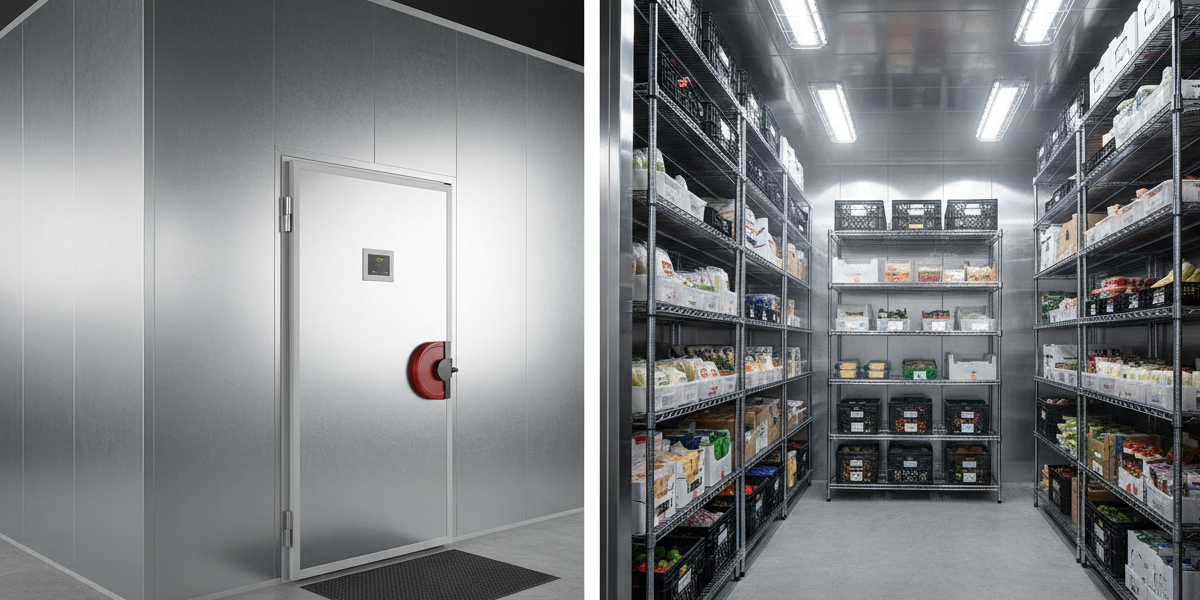
Walk-in cooler repair covers four systems: the compressor and condensing unit, the evaporator and defrost system, the door assembly and gaskets, and the electrical controls. When one of them fails, your inventory is on a clock. The FDA Food Code caps cold holding for perishable food at 41°F [1]. Product that sits above that threshold for more than four hours generally has to be discarded, and a single walk-in failure can put $2,000 to $10,000 of inventory at risk [2].
In this article:
- The most common walk-in cooler failures and what causes them
- When to call a technician, and what to check before you do
- What walk-in cooler and freezer repairs typically cost
- How walk-in freezer repair differs from cooler repair
- The repair-versus-replace framework
Walk-In Cooler Repair Quick-Reference
|
Sources: FDA, Kitchen Repair Hub [1, 2]. Actual pricing varies by market, unit age, and parts availability.
he Most Common Walk-In Cooler Problems
Evaporator ice buildup is the failure operators report most often. When a defrost timer or heater quits, ice accumulates on the coils and chokes off airflow [2]. The unit runs continuously, the compressor sounds like it’s working, but box temperature climbs anyway.
Door gasket deterioration runs a close second. A compressed or torn gasket lets warm, humid air into the box, forcing longer compressor cycles and accelerating icing on the coils [2]. Left alone, a $200 gasket becomes a compressor failure. That cascade is why gaskets get inspected on a schedule rather than when someone notices frost.
Condenser coil fouling from grease and kitchen debris is the most preventable failure of the group. Head pressure rises, the compressor overheats, and the high-pressure safety switch trips. Dirty coils are a leading driver of failure and elevated energy bills across commercial refrigeration generally.
Compressor failure and refrigerant leaks are the expensive ones. Watch for a compressor that never cycles off, oil staining near refrigerant fittings, and a box temperature that creeps up over days rather than dropping suddenly.
When to Call a Walk-In Cooler Repair Technician Near You
Call immediately if your cooler has exceeded 41°F or your freezer has exceeded 0°F and you can’t identify a simple cause such as a propped door, a tripped breaker, or a disconnected power supply [1]. Food safety timelines are too short for a wait-and-see approach.
For everything else, same-day service is the right response to a compressor making irregular noise, oil stains near refrigerant lines, evaporator ice that survives a defrost cycle, or a condenser fan that isn’t spinning while the compressor runs [2].
Before you call, four checks take five minutes:
-
log the current box temperature
-
keep the door closed to slow the rise
-
check the electrical panel for a tripped breaker
-
run a hand around the door gasket to feel for warm air
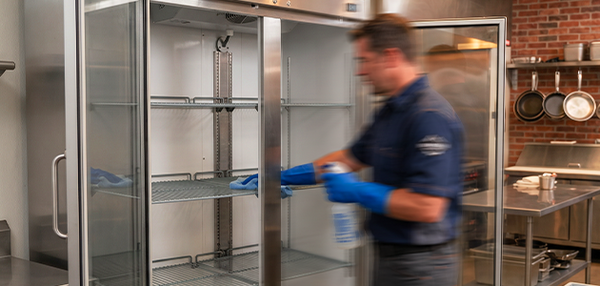
Write down what you find. Diagnostics are billed by the hour, and a technician who arrives with an accurate symptom description spends fewer of them.
What Walk-In Cooler Repair Costs
Minor repairs, meaning thermostat swaps, relay replacements, gasket work, and drain line clearing, generally land between $150 and $400. Mid-range repairs such as fan motors, defrost components, and control boards run $400 to $1,200. Major work climbs from there: compressor replacement is commonly quoted between $2,000 and $4,500 [2, 3].
Two variables move the final number more than the part does. Commercial refrigeration labor runs roughly $150 to $250 per hour in higher-cost metros, and emergency or after-hours calls add a premium rate or a minimum diagnostic fee [3].
The second is parts availability. A component that has to be ordered turns a same-day fix into a three-day outage. The repair bill covers the price of the broken part. It doesn’t capture the loss of three days of spoiled inventory and closed-door revenue.
Walk-In Freezer Repair: How It Differs
Walk-in freezer repair touches the same four systems, but the lower operating temperature raises the stakes on every one of them. Freezers hold at 0°F or below, so a thermal event reaches product faster and with less margin for error.
Defrost failures also behave differently. Frost accumulates faster and denser, and a failed defrost heater can pack an evaporator coil solid in a fraction of the time the same failure would take in a cooler. Compressor components cycle harder, which compounds the damage from fouled condensers and slow refrigerant loss.
|
Factor |
Walk-In Cooler |
Walk-In Freezer |
|
Safe temperature threshold |
41°F |
0°F |
|
Escalation speed after failure |
Moderate |
Fast |
|
Ice buildup risk |
Moderate |
High |
|
Defrost failure frequency |
Common |
Very common |
Repair vs. Replace: Making the Call
The working benchmark across the trade is roughly 50%. When a repair estimate approaches half the cost of a comparable replacement, replacement usually wins on total cost of ownership. Age sharpens that math: a quality commercial refrigeration unit should last 10 to 15 years with proper maintenance, and equipment at or past that mark tends to produce a second failure within two years of the first. Two or more significant service calls inside 12 months is the other reliable signal, as is a model with parts that are no longer manufactured.
|
Condition |
Repair |
Replace |
|
Unit under 7 years old |
✓ |
|
|
Repair cost under 50% of replacement value |
✓ |
|
|
First major failure on the unit |
✓ |
|
|
Unit 10+ years old |
✓ |
|
|
Repair cost over 50% of replacement value |
✓ |
|
|
Two or more major repairs in the past 12 months |
✓ |
|
|
Parts no longer available for the model |
✓ |
One caveat specific to walk-ins: the box, the condensing unit, and the evaporator can each be replaced independently. A failed condensing unit does not always mean a new walk-in. Ask your technician to price the refrigeration system separately from the box before accepting a full replacement quote.
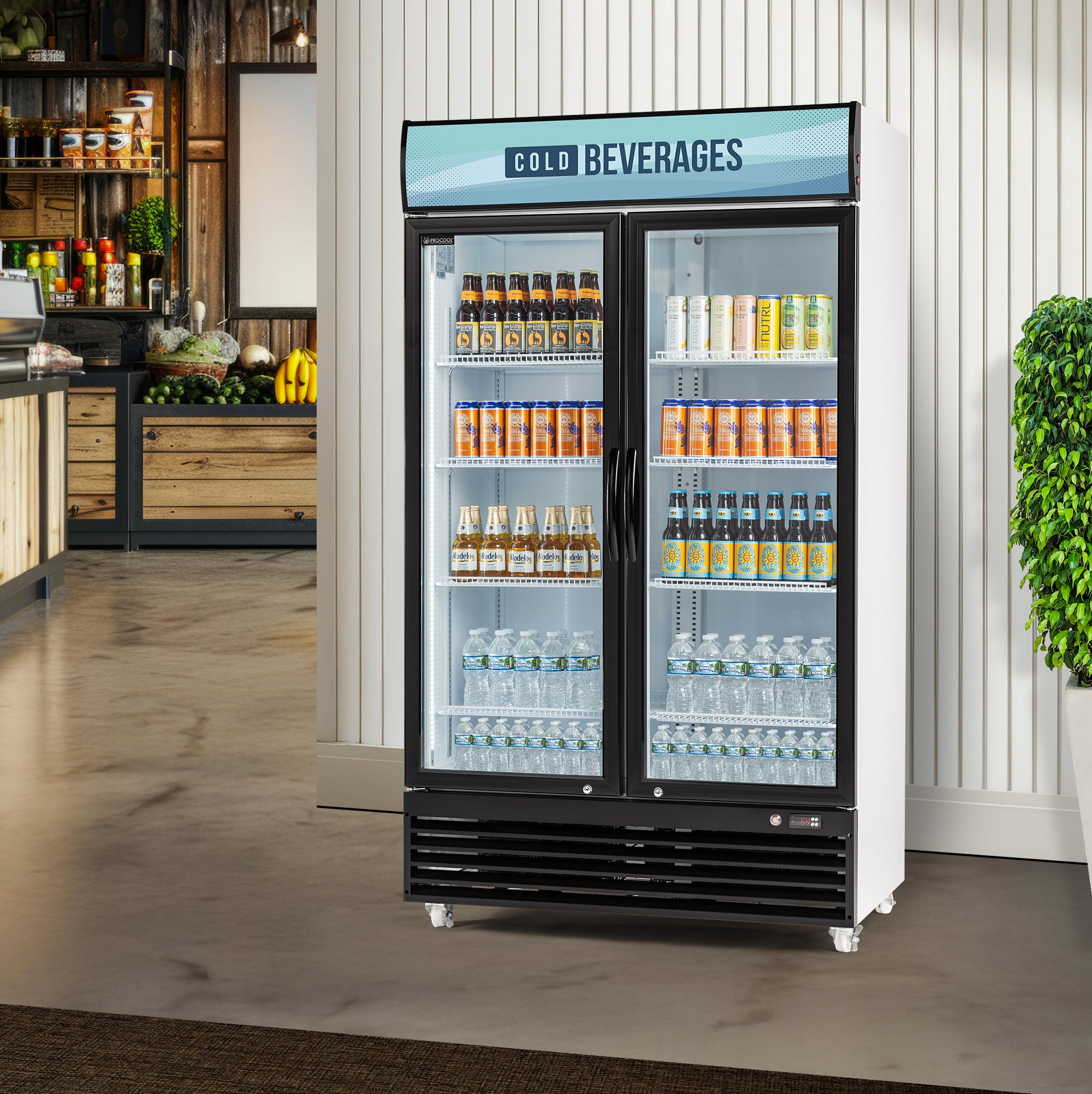
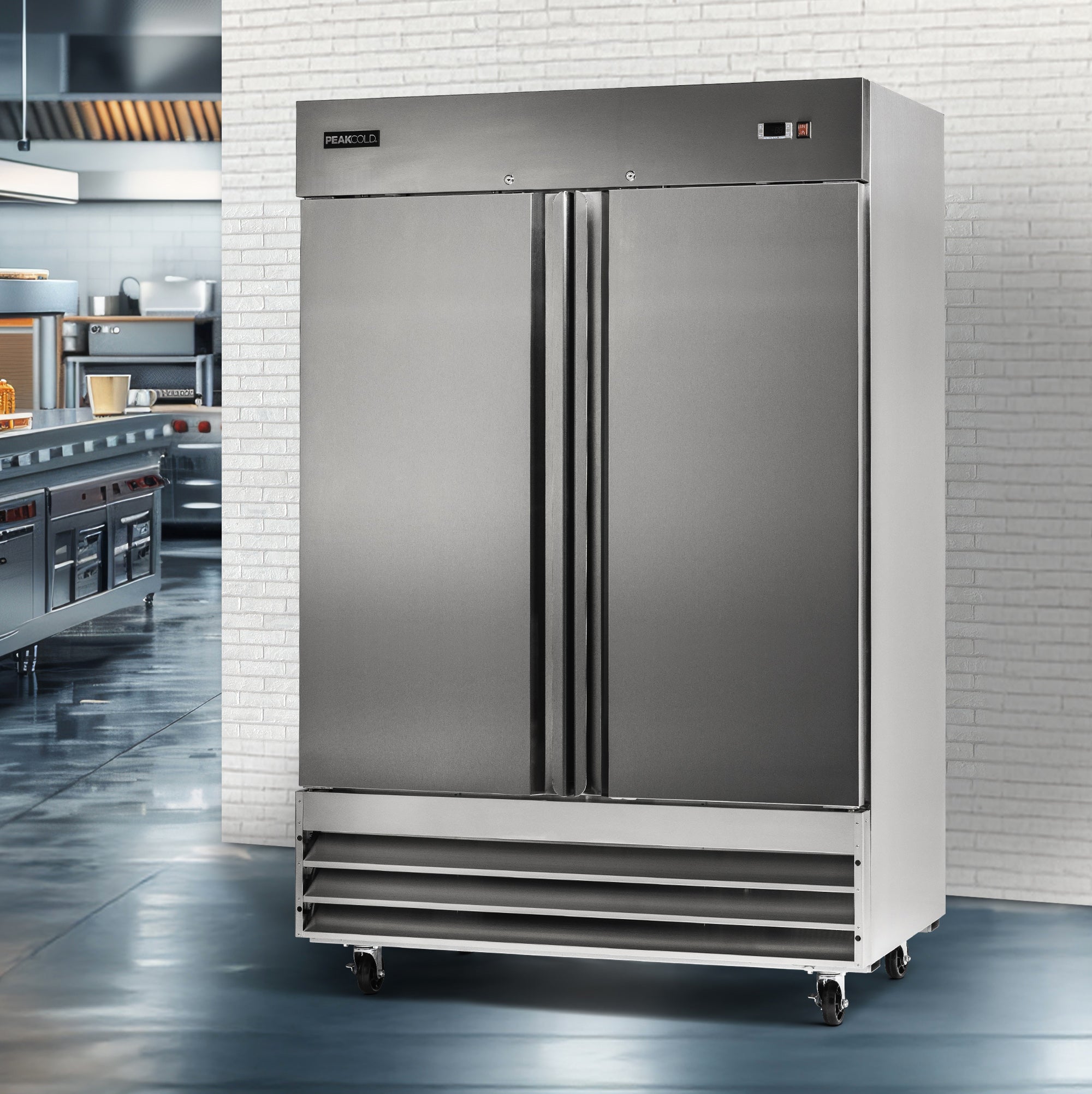
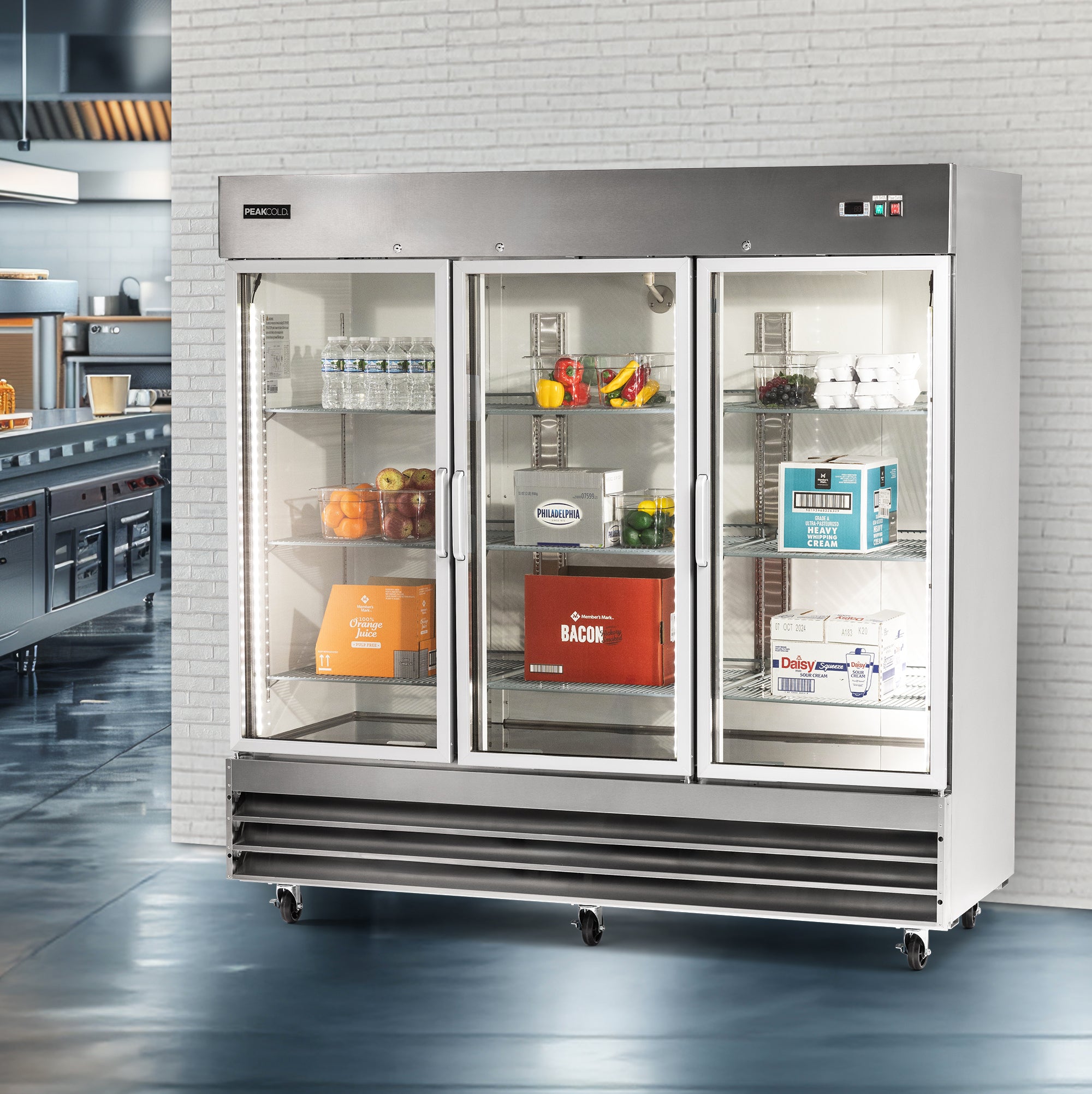
There’s also a gap most operators don’t plan for. A walk-in replacement takes weeks, and service doesn’t pause while you wait. Reach-in refrigerators, freezers, and display coolers cover that gap and stay useful afterward as line storage, overflow, or front-of-house merchandising.
Preventing the Next Repair
Condenser coil cleaning every 30 to 90 days is the highest-value maintenance habit in the building, and high-grease kitchens need it more often. Most operators can handle it with a soft brush and a shop vacuum on the accessible fins. Inspect gaskets twice a year. Then log box temperature daily, because a two-degree drift caught on a Tuesday costs almost nothing to correct and the same drift found during a health inspection costs considerably more.
|
Task |
Frequency |
DIY or Tech? |
|
Condenser coil cleaning |
DIY |
|
|
Door gasket inspection |
Every 6 months |
DIY |
|
Door gasket replacement |
As wear appears |
Tech |
|
Evaporator coil inspection |
Annually |
Tech |
|
Refrigerant level check |
Annually |
EPA-certified tech |
|
Drain line flush |
Every 90 days |
DIY |
Where Iron Mountain Fits
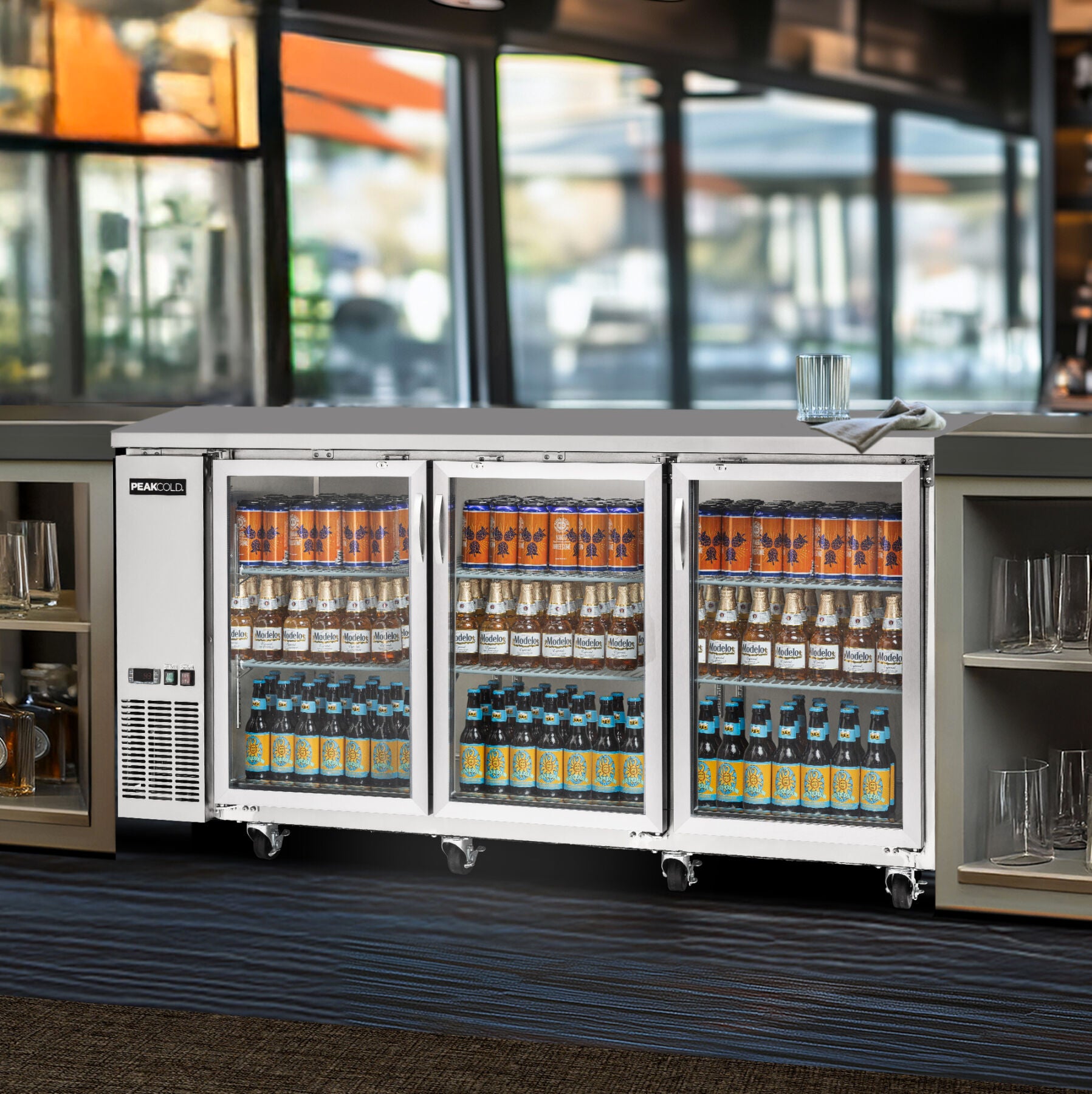
Iron Mountain Refrigeration employs its own service technician and provides on-site repair within a 30-mile radius of its Pleasant Prairie, Wisconsin warehouse, covering walk-ins, display coolers, commercial freezers, ice makers, and prep tables. Outside that radius, the team still answers the phone at (833) 734-8880 to help troubleshoot the problem, source parts, or point you toward a vetted technician. Iron Mountain also handles warranty service on its own PeakCold, PeakCold Plus, and Procool equipment in-house, with parts stocked on site rather than ordered through a manufacturer.
If you’re hiring a technician independently, confirm EPA Section 608 certification before authorizing any work that touches refrigerant. It’s a legal requirement, not a preference [4].
Frequently Asked Questions
How long does walk-in cooler repair take?
Minor repairs such as thermostat replacement, gasket swaps, and drain line clearing are usually finished in one to three hours on a single visit. Major work such as compressor replacement runs four to eight hours of labor. When a part isn’t in stock, add one to three business days. Buying equipment from a supplier that stocks parts in-house shortens that wait.
What is the most common cause of walk-in cooler failure?
Evaporator ice buildup from a failed defrost system, followed by door gasket deterioration and condenser coil fouling from kitchen grease [2]. All three are largely preventable: coil cleaning every 30 to 90 days and semi-annual gasket inspection head off the majority of service calls.
How do I find walk-in cooler or commercial freezer repair near me?
Start with your equipment supplier rather than a general directory, because a supplier that stocks parts can often resolve the issue on the phone. Iron Mountain provides on-site repair service within a 30-mile radius of its Pleasant Prairie, Wisconsin warehouse. Buyers outside that service area can call and get help troubleshooting, sourcing parts, or locating a technician the team has worked with before. Whoever you hire, confirm EPA Section 608 certification before authorizing refrigerant work [4].
When does replacing a walk-in unit make more sense than repairing it?
When the repair estimate approaches half the replacement cost, when the unit is 10 or more years old, or when it has needed two or more major repairs in the past 12 months. Older equipment also carries higher energy costs, which rarely appears in a repair quote but shows up on every utility bill.
Repair Smart, Buy Right
Walk-in failures are urgent, expensive, and mostly preventable. Trace the issues in this guide back far enough and you land on the same three gaps: skipped coil cleanings, worn gaskets nobody replaced, and a temperature drift somebody noticed but didn’t act on. When a failure does happen, whether you lose an afternoon or a week has less to do with the brand on the box than with whether the people behind your equipment answer the phone.
Iron Mountain Refrigeration is a refrigeration-only supplier with a 5.0 Google rating across 185 reviews, an A+ Wisconsin BBB rating, in-house warranty handling, stocked parts, and a service technician on staff. For operators weighing a repair against a replacement, or covering a gap while a walk-in is down, the equipment decision and the support decision are one in the same.
Browse Iron Mountain's Commercial Refrigeration Equipment
Last updated: July 10, 2026
Sources
-
U.S. Food and Drug Administration. FDA Food Code 2022, Section 3-501.16. https://www.fda.gov/food/retail-food-protection/fda-food-code
-
KitchenRepairHub. "Walk-In Cooler Repair: Costs, Failures, and the 4-Hour Rule." Published February 2026; updated May 2026. https://kitchenrepairhub.com/guides/walk-in-cooler-repair/
-
1-800 Cool Aid. "Walk-In Cooler Repair Cost Guide for Businesses." Accessed July 2026. https://1800coolaid.com/cost-to-repair-a-walk-in-cooler/
-
U.S. Environmental Protection Agency. "Section 608 Technician Certification." Accessed July 2026. https://www.epa.gov/section608