
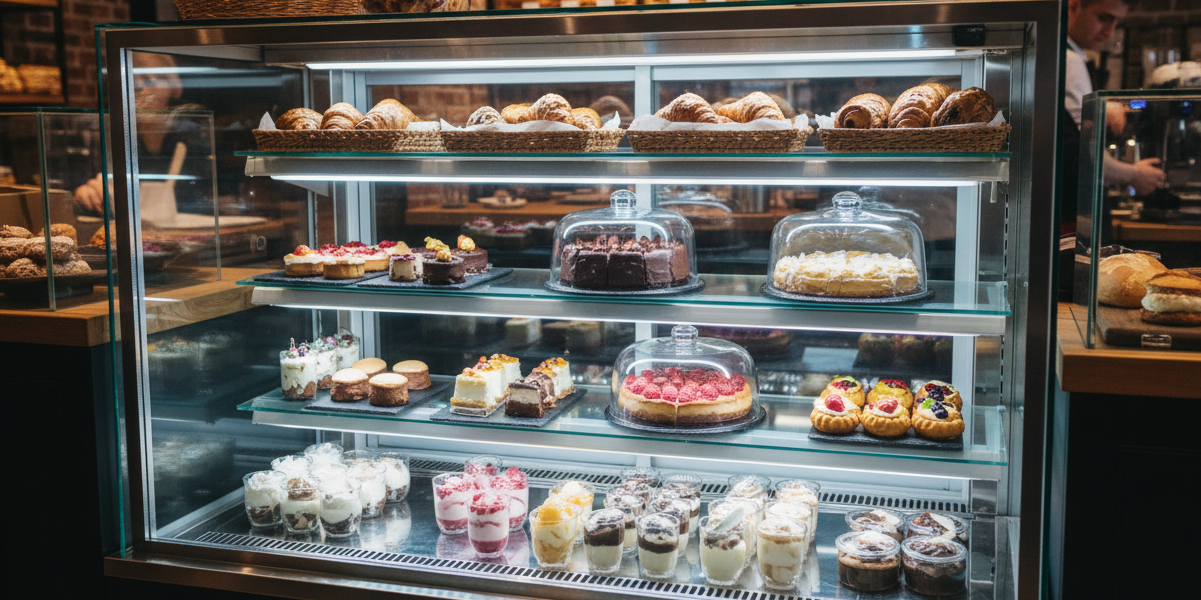
In a bakery, the first sale happens before a single word is spoken. Customers peruse. They pause. They decide. A pastry display case sits at the center of that moment, acting as both stage and spotlight. It isn't passive storage. It's part salesperson, part storyteller, and part traffic controller for your counter space.
Introduction: The Power of Visual Merchandising
You already know that customers eat with their eyes first. A bakery display that offers a clear, inviting view encourages lingering, second looks, and impulse choices. Four-sided glass changes behavior in subtle ways. When pastries are visible from multiple angles, shoppers don't need to lean or ask questions. They just point. Lighting amplifies this effect. Bright, even illumination makes color pop and texture feel fresh, which directly influences buying decisions.
This bakery display case buying guide is meant to help you balance appearance with preservation. A bakery display case should make product irresistible while keeping it stable, safe, and sale-ready all day. Here's how to choose a pastry display case.
Essential Features of a Professional Pastry Case
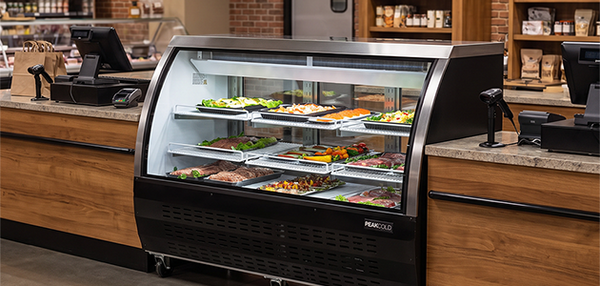
Not all bakery cases are built the same, even when they look similar at first glance. A true pastry display case separates itself through visibility, materials, and control. Four-sided glass matters more than many owners expect. Dark corners kill sales. Products placed there often get overlooked, then written off as unpopular. PeakCold units eliminate those dead zones by keeping every shelf in view.
Lighting deserves equal attention. LED interior lighting is standard for a reason. It stays cool, which protects delicate glazes and butter-based frostings. Traditional lighting adds heat, and heat shortens shelf life. LEDs keep presentation crisp without introducing unnecessary risk.
Deli Case or Bakery Case – What's the Difference?
Adjustable shelving turns one case into many. One day you're showing flat pastry trays. The next, tall cakes or layered desserts. Flexibility lets you adapt without rearranging your menu or crowding shelves. These features define the difference between a general display case and purpose-built bakery display cases designed for pastry.
Temperature Control: Preserving Delicate Textures
Temperature control isn't just technical. It's tactile. Pastry texture depends on consistency. Too warm and fillings soften. Too cold and crusts dry out. The ideal range for most pastries kept in a refrigerated display case sits at 33-41 degrees Fahrenheit, protecting dairy, fruit, and creams without damaging structure.
Digital controllers make this achievable. Dixell digital controllers, a PeakCold standard, give you precise readings instead of vague guesswork. You can monitor performance, adjust settings, and manage defrost cycles without opening the case or disrupting product.
Airflow design also matters. Commercial systems move air steadily, not aggressively. That avoids the wind-tunnel effect that pulls moisture from pastry surfaces. The result is longer-lasting freshness and fewer texture complaints at the counter.
Sizing and Layout: Fitting the Case to Your Space
Choosing the right size comes down to volume, not ambition. A 36" pastry display case works well for cafés or limited menus. It keeps selection tight and presentation focused. Mid-sized bakeries often land in the 48" to 60" range, where variety increases without overwhelming the space. High-volume shops producing pies, cakes, and pastries daily usually benefit from 71" models.
Finish plays a role, too. Stainless steel supports a modern, industrial look and handles heavy use well. Black vinyl fades into the background, keeping attention on the bakery display itself rather than the equipment. Both work. The choice depends on brand tone and interior design.
Before ordering, measure more than the footprint. Check doorways, hallways, and turns. The path of entry matters just as much as where the case will sit once installed.
Maintenance and Longevity: Protecting Your Investment
Cleaning should feel manageable, not disruptive. No-drain refrigeration systems simplify this dramatically. PeakCold units use a self-evaporating water tray that removes condensation automatically. You avoid floor drains, extra plumbing, and manual emptying.
Stainless steel interior floors support quick cleanup. Spills wipe away. Sugar doesn't embed. Over time, this reduces wear and keeps the case looking professional. Routine gasket checks and basic coil cleaning extend compressor life and prevent performance drift. Small habits add years.
Why Buy Your Pastry Equipment From Iron Mountain Refrigeration?
Logistics often derail bakery fridges and equipment purchases. Iron Mountain Refrigeration and Equipment removes common obstacles. Free freight shipping includes a lift gate and scheduled delivery appointment, avoiding surprise fees that can easily run into the hundreds.
Warranty coverage matters, especially for new bakeries. The PeakCold Rock Solid Warranty covers parts and labor, reducing financial risk. Flexible financing options, including PayPal Credit and FirstLease, help spread costs and keep cash available for ingredients, staff, and marketing.
FAQ: Pastry Display Case Buyer's Guide
What is the best temperature for refrigerated bakery & cake display cases?
For most cream and fruit-filled pastries, 33-40 F keeps products safe while maintaining texture.
Can I put warm pastries directly into a refrigerated case?
It's better to let items cool first. Warm pastries create condensation and stress the compressor.
Do these cases require special electrical outlets?
Most standard models use a 110v plug, making installation straightforward in most shops.
Does “free shipping” include getting the unit inside my shop?
Free shipping includes curbside delivery with a lift gate and scheduled appointment. Interior placement isn't included, but preparation keeps things moving smoothly.
Choosing the right pastry display case is about aligning presentation, preservation, and practicality. When visibility is clear, temperature stays steady, and maintenance doesn't interrupt your day, the case earns its place as a true sales tool within your commercial bakery equipment guide and daily workflow.