
Your commercial freezer door won't seal. The alarm's going off, the temp's rising, and you need a solution right now. Not three hours from now, when a repair tech can squeeze you in.
Here's what you need to know: these seven common problems cause 95% of seal failures, and most of them take minutes to fix yourself. We've ordered them from easy to straightforward. Grab a dollar bill for a quick diagnostic test, and let's get that door sealed.
But First, Try the Dollar Bill Test
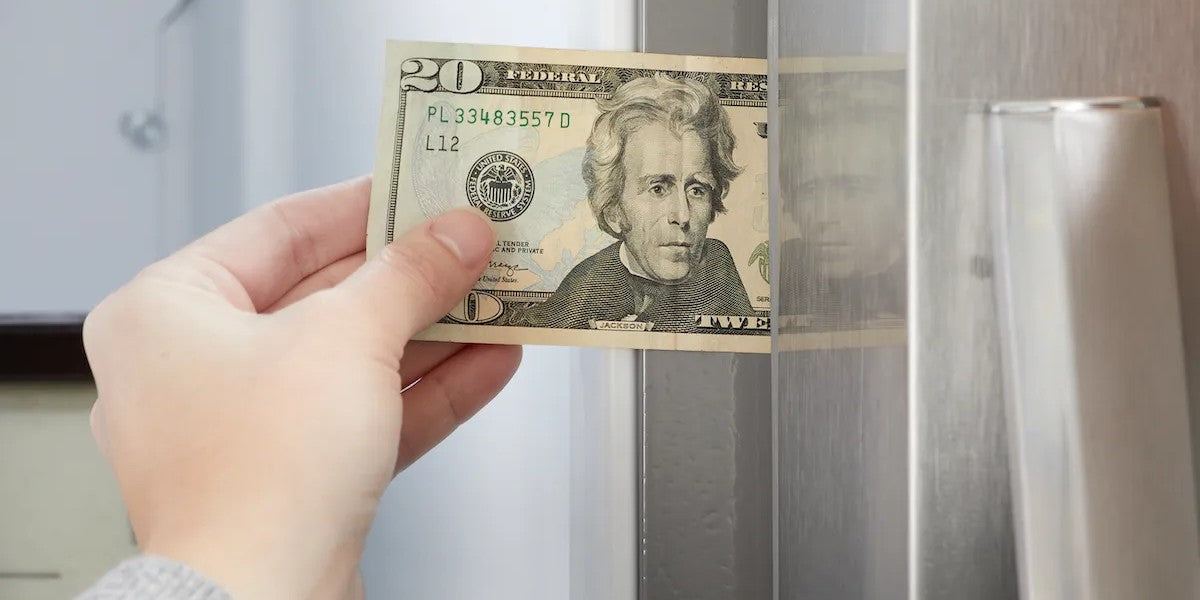
Before you do anything else, grab a dollar bill. Open your commercial freezer door, place the bill against the gasket, and close the door on it. Now try to pull the bill out.
If it slides out easily, your seal is failing, and it's costing you in wasted energy and potentially spoiled product. If the bill resists or tears when you tug, your gasket is doing its job. This simple test takes ten seconds and tells you whether you need to fix your seal or look elsewhere for the problem.
Cause 1: Dirty Gaskets
Here's something most operators don't realize: commercial kitchen grease doesn't just sit on the gasket; it actively breaks down the rubber at a chemical level. That sticky residue makes the material stiff and brittle, which prevents it from flexing properly to create an airtight seal.
Grab some warm water and mild dish soap, then scrub every fold and crevice of that gasket. Skip the harsh cleaners and bleach. They'll do more harm than good. A clean, flexible gasket can instantly restore your seal and drop your energy bills without costing you a penny.
Cause 2: Obstructions
Sometimes the problem isn't the door at all: it's what's in the way. Check for the sneaky culprits: a sliding shelf that didn't quite click back into place, a cardboard box flap sticking out past the door frame, or packaging that's preventing a flush close.
Don't forget to look down. Debris in the bottom hinge or track can hold the door open just enough to break the seal. A thirty-second inspection can save you hours of unnecessary troubleshooting.
Cause 3: Heavy Ice Buildup
Ice buildup around your door frame isn't just a symptom of a bad seal—it can actually cause the problem. When ice forms thick enough around the edges, it physically prevents the door from sitting flush against the gasket.
You'll need to manually defrost any ice that's built up around the frame. While you're at it, check your drain line to make sure water isn't backing up and refreezing at the threshold. This ice-then-gap-then-more-ice cycle will keep repeating until you address the root cause.
Cause 4: Sagging Doors
Commercial freezer doors are heavy. Really heavy. Over time, that weight can take a toll on the hinges. Metal bends, screws work themselves loose, and suddenly you have a fridge or freezer door not closing properly because it is hanging lower than the cabinet.
Start by tightening any loose screws on the hinges. If the door still sags, add washers to shim it back into alignment. Sometimes you'll need to actually adjust the hinge position. Most commercial units have slotted holes that let you shift the door up, down, or sideways to get a proper seal again.
Cause 5: Improper Leveling
Your "self-closing" door relies on gravity to work. If your unit isn't level or if it's tilting the wrong direction, that automatic closing mechanism won't function properly. The door needs to swing shut on its own using the cam mechanism, which only works when physics is on your side.
Use a carpenter's level on top of the cabinet. The front should be level or very slightly higher than the back. If it's tilted forward, the door will swing open instead of closed. Adjust the leveling feet at the base of the unit until you get the right angle, and watch that door start closing itself like it's supposed to.
Cause 6: Broken Latches
Check your latch mechanism first. Sometimes food debris gets stuck in there and prevents it from engaging properly. Clean it out and add a drop of food-safe lubricant if needed.
Then test the magnetic seal itself. Hold a flashlight inside the closed freezer and look for light bleeding through the gasket. If you see light, the magnetic strip inside the rubber has either demagnetized or was never strong enough to begin with. Unfortunately, you can't remagnetize a gasket.ou'll need to replace it entirely to restore proper magnetic pull.
Cause 7: Physical Damage
If your gasket is ripped, cracked, or has turned brittle and hard, no amount of cleaning will bring it back to life. Physical damage means the rubber has reached the end of its useful life.
Run your hand along every inch of the gasket and check for these signs that it's beyond repair:
- Visible cracks or tears in the rubber
- Hard, brittle sections that won't flex
- Permanent creases or warping that won't straighten
How to Replace a Commercial Freezer Gasket
Replacing a freezer gasket sounds intimidating, but it's really just a five-minute job once you know the trick. The key is preparation: you absolutely must soak your new gasket in warm water for at least 15 minutes before installation. This relaxes the rubber and makes it flexible enough to install properly.
Once it's soaked, peel out the old gasket starting at a corner. Take your warm, pliable new gasket and begin snapping it into the retaining groove, starting at the corners and working your way around. The rubber should slide into place easily. If you're forcing it, the gasket needs more soaking time.
With a Hair Dryer
Got a gasket that's warped but not damaged? You can reshape it with a hair dryer but you need patience and a light touch. Use the lowest heat setting and work slowly, gently warming sections of the rubber while massaging them back into shape.
High heat will melt the rubber and ruin your seal permanently. Think "gentle warm-up" not "blast furnace." This technique works great for minor warping and can buy you extra months before you need a full replacement.
Final Thoughts on How to Fix a Freezer Door Seal
A commercial freezer door not sealing properly isn't just an annoyance: it leads to spoiled inventory, failed health inspections, and energy bills that'll make your accountant cringe. Most sealing issues come down to dirty gaskets, obstructions, ice buildup, or simple adjustments you can handle yourself in under an hour.
Repair vs. Replace: Finding Iron Mountain Refrigeration Parts or a New Commercial Freezer
Here's the hard truth: sometimes the door isn't the problem. The entire unit is. If the metal door itself is warped beyond adjustment, or if the cabinet face has rusted to the point where no gasket can seal against it, you're throwing good money after bad by patching it up.
That's when it makes more sense to invest in a reliable new commercial refrigerator or freezer from Iron Mountain. Our units come with free shipping and solid warranty coverage, which means you're not just buying equipment, you're buying the security that comes with knowing we'll always have your back.
When you need specific parts to complete a repair, or when you're ready to upgrade to equipment that won't let you down, our team is here to support your business with real humans who actually answer the phone. Contact us today.
Common Questions About Commercial Freezer Door Repair
<h3">Why does my other freezer door pop open when I close one?
That's actually normal physics at work. When you close one door, it forces air into the cabinet, and that pressure has to go somewhere, so it pushes the other door open for a split second. As long as that door sucks itself back shut immediately, you're fine. If it stays popped open, you've probably got a weak magnetic seal or a leveling issue on your hands.
How do I find the right replacement gasket?
Don't trust a tape measure. Old gaskets stretch and flatten over time, so measuring the one you're replacing usually leads to buying the wrong part. Instead, find your data plate (it's usually a sticker on the inside cabinet wall) to get your Model and Serial number. Once you have those, give us a call and we'll look up the exact factory match for you.
How often should I clean my commercial freezer gaskets?
Weekly, if you can manage it. We know kitchens are chaotic and time is tight, but grease is the number one killer of door seals. Animal fats chemically harden rubber and cause it to crack prematurely. One quick wipe-down with warm soapy water every week will double the lifespan of your gaskets and save you money on replacements down the line.